
3 Ways Sellers Close a Home With Aluminum Wiring, Skip Full Repairs
Yes, a house with aluminum wiring can still be bought and sold, but the sale usually hinges on what an electrician finds first. Before listing or making an offer, get a licensed electrician to inspect the branch-circuit wiring and confirm what your insurer and lender will require. Permanent fixes like full replacement, COPALUM crimps, or AlumiConn connectors exist and are widely accepted once documented.
TL;DR:
- Replacing solid aluminum wiring with copper removes fire risks but involves significant costs and wall disruptions, making it suitable mainly for major renovations.
- Certified repairs with COPALUM crimping or AlumiConn connectors are accepted solutions that mitigate fire hazards when properly documented.
- Aluminum wiring present in homes built between 1965 and 1973, especially if identified as “AL” or “ALUMINUM,” should be inspected for loose or oxidized connections that pose fire risks.
- Insurance companies and lenders often require detailed electrician reports and documentation before coverage or financing is approved for homes with unremediated aluminum wiring.
- Sellers can choose to remediate, disclose and negotiate repairs, or sell as-is with proper disclosures, with the best option depending on their timeline and financial situation.
Table of Contents
- Why Aluminum Wiring Raises Safety Concerns
- Spotting Aluminum Wiring and What to Put in an Inspection Report
- Fixing Aluminum Wiring: What Works and What to Avoid
- How Insurers and Lenders Treat Unremediated Aluminum Wiring
- How to Sell or Negotiate When Aluminum Wiring Is Present
- When Repair Is Worth It and When Speed Matters More
- Selling a Home With Aluminum Wiring Through AAS Home Buyers
- FAQ
- Sources
Why Aluminum Wiring Raises Safety Concerns
Solid aluminum branch-circuit wiring installed in most homes built between 1965 and 1973 behaves differently than copper at the connection points. Aluminum expands and contracts more with temperature changes, oxidizes when exposed to air, and loosens at screw terminals over time, a process inspectors call connection creep. Loose, oxidized connections heat up under load, and that heat is where the risk concentrates.
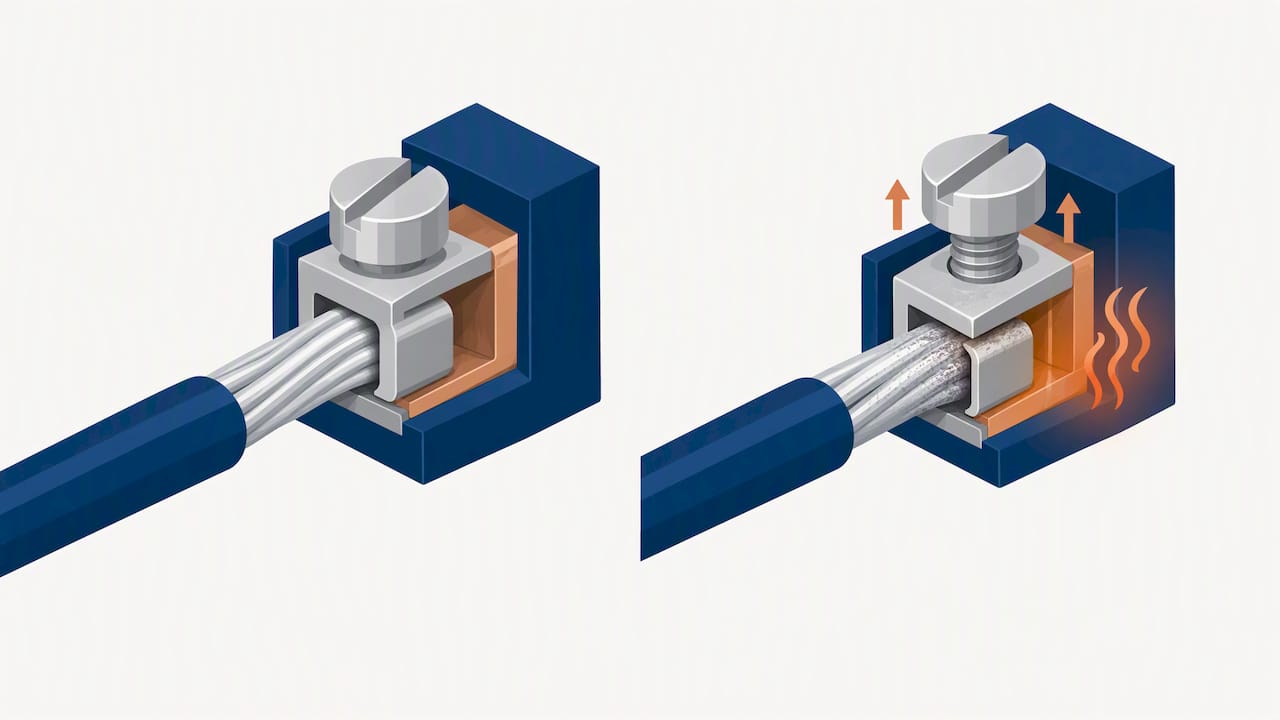
CPSC testing found that outlet terminal connections in pre-1972 aluminum-wired homes reached “Fire Hazard Conditions” far more often than comparable copper-wired homes, which is why the agency recommends permanent repair rather than leaving original terminations in place. During a walk-through, warning signs include warm or discolored switch plates, flickering lights, a persistent burning smell near outlets, and breakers that trip without an obvious cause. None of these confirm aluminum wiring on their own, but they’re reasons to call an electrician before they become reasons to call a fire department.
Spotting Aluminum Wiring and What to Put in an Inspection Report
Aluminum wire is usually stamped “AL” or “ALUMINUM” along its jacket, and the easiest places to check are the breaker panel, attic junction boxes, and any exposed runs in the basement. A general home inspector can usually confirm the wiring’s presence and material, but the next step depends on what they find.
- A standard home inspection should note whether branch-circuit wiring is solid aluminum, since InterNACHI standards require inspectors to report single-strand aluminum wiring and recommend a licensed electrician evaluate any suspected pre-1972 installation.
- Stranded aluminum used in larger circuits, like dedicated appliance lines, is a different and generally lower-risk category than the solid single-strand type from that era.
- A full electrician’s report should specify whether the wiring is solid or stranded, list every unremediated termination found, not just the obvious ones, and recommend a specific repair method.
Inspectors and electricians focus on what’s sometimes called the “last inch,” the actual connection point at switches and outlets, because that’s where nearly every failure originates, so a usable report counts terminations rather than just confirming the wiring exists.
Fixing Aluminum Wiring: What Works and What to Avoid
Three repair paths are generally accepted, and they differ mainly in cost, disruption, and availability of qualified installers.
- Full copper replacement removes the risk entirely but means opening walls and ceilings, which makes it the most disruptive and often the most expensive option, typically reserved for major renovations.
- COPALUM crimping uses a specialized powered tool to create a cold weld between aluminum and copper wire at each termination. CPSC guidance treats COPALUM as a permanent repair, though it requires a trained, certified installer, who can be hard to find in some areas.
- AlumiConn connectors offer an accepted alternative where COPALUM installers aren’t available, provided the work is documented by a licensed electrician.
Twist-on pigtail connectors, sometimes used as a quick fix, were tested and found unsafe, and CO/ALR-rated devices only address the device itself, not the wiring behind it, so neither qualifies as a permanent solution on its own.
Cost depends on the number of terminations, how accessible they are, and regional labor rates, with whole-house remediation costing significantly more than addressing a handful of outlets and switches.
Pro Tip: Ask any electrician you hire for a termination count before they start, since quotes based on a flat “aluminum wiring fix” price often miss hidden connections in attics and crawl spaces.
How Insurers and Lenders Treat Unremediated Aluminum Wiring
Unremediated solid aluminum wiring is one of the more common reasons an insurer declines coverage or a lender stalls a closing, since both are weighing the same fire risk the CPSC testing identified. Insurers often require proof before issuing or renewing a policy, and lenders may make financing contingent on the same documentation.
- A licensed electrician’s written report describing the wiring type and condition typically forms the baseline documentation insurers ask for.
- Photos of completed COPALUM or AlumiConn repairs, labeled by location, help confirm the work without requiring a return visit.
- Repair receipts and any permits pulled for the work give both insurers and lenders a paper trail they can verify.
A related red flag worth checking at the same time: local fire authorities have issued separate warnings about Federal Pacific Electric (FPE) Stab-Lok panels, which can compound insurability problems when paired with aluminum branch wiring. Practical workflows that keep deals moving include getting repair estimates early, requesting a conditional insurance letter before closing, and negotiating an escrow holdback that releases funds once remediation is verified.
How to Sell or Negotiate When Aluminum Wiring Is Present
Sellers generally have three workable paths, and each one changes the negotiation conversation.
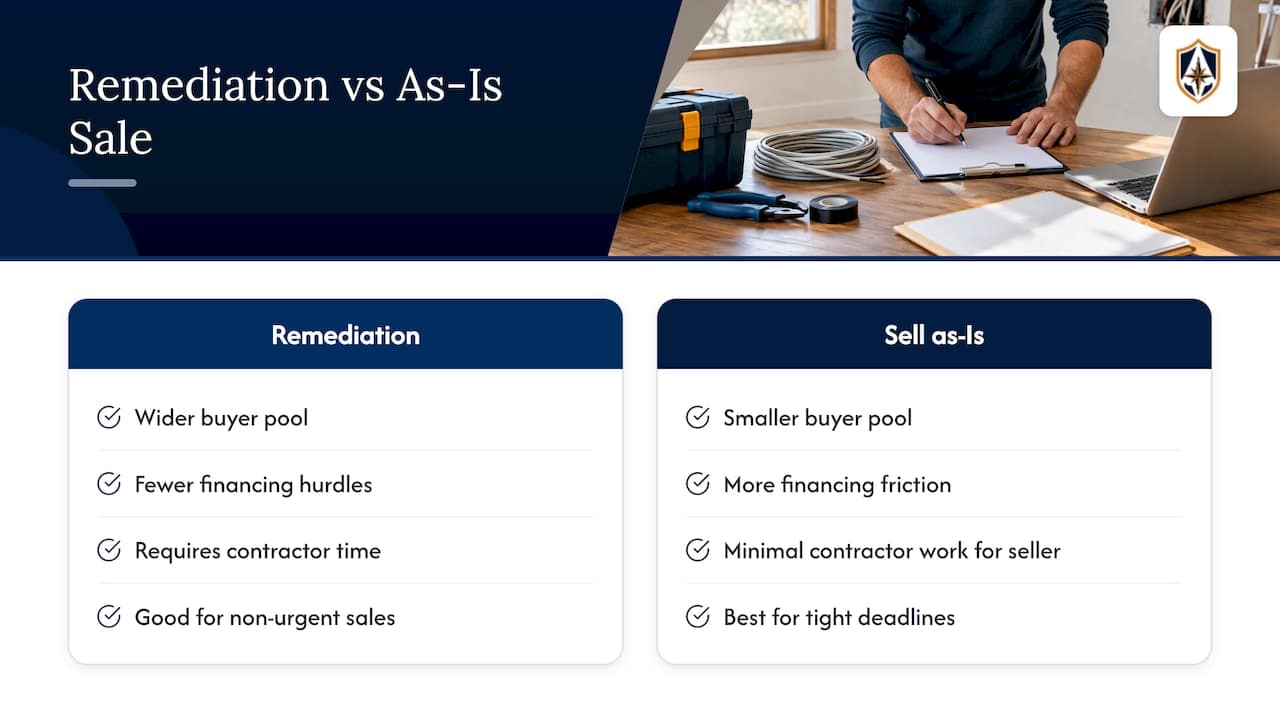
- Remediate before listing: get an electrician’s assessment, choose full replacement or COPALUM/AlumiConn repair, and market the home with documentation in hand rather than disclosing an open issue.
- List as-is with disclosure: provide a detailed disclosure, attach a repair estimate to the listing packet, and offer a repair credit or escrow holdback so buyers can finance with confidence.
- Sell directly to skip the repair timeline: this suits sellers who can’t absorb weeks of electrician scheduling and permit delays, and it’s where a pre-listing inspection comparison or an as-is sale approach becomes worth weighing against a faster alternative.
On the negotiation side, buyers can reasonably request a termination-by-termination electrician report, a price reduction equal to the remediation estimate, or a holdback tied to post-closing repair completion. Attaching real quotes to an offer, rather than a verbal estimate, tends to move talks along faster, a point echoed in general real estate negotiation guidance.
When Repair Is Worth It and When Speed Matters More
Full remediation widens your buyer pool and removes financing friction, but it isn’t always the right call. A seller facing a tight relocation deadline, an inherited property with multiple unresolved issues, or simply no appetite for managing contractors is often better served by pricing the wiring into the deal and selling on a faster timeline. What matters most in either path is the same: honest disclosure and documentation that lets a buyer, insurer, or lender verify exactly what they’re getting, which protects your equity regardless of which route you take.
Selling a Home With Aluminum Wiring Through AAS Home Buyers
We offer sellers a way to skip the electrician scheduling, permit delays, and buyer financing contingencies that aluminum wiring can introduce into a traditional sale. Through Direct Purchase, our Retail Buyer Program, and vetted agent referrals, we give you a path that matches your timeline instead of one dictated by remediation logistics.

| Option | Best fit | What it removes |
|---|---|---|
| Direct Purchase | Sellers who want certainty and speed | Repair timeline, financing contingencies |
| Retail Buyer Program | Sellers who want a managed listing | Day-to-day marketing and showing logistics |
| Realtor Referral Program | Sellers who prefer a traditional sale with specialist support | The search for an agent experienced with disclosure issues |
Request a property evaluation through AAS Home Buyers to see which option fits your situation.
FAQ
What is the price of 1 kg of aluminum wire?
Aluminum wire pricing isn’t published as a fixed consumer figure, since it shifts with metal markets and wire gauge. Rather than pricing raw wire, focus instead on termination-based repair quotes from a licensed electrician, which reflect your home’s actual wiring layout.
What are the code requirements for aluminum wiring?
Code requirements vary by jurisdiction, but inspection standards from groups like InterNACHI call for reporting solid single-strand aluminum branch wiring and recommend a licensed electrician evaluate it. CPSC guidance adds that every termination and splice should be addressed during a repair rather than just the ones showing visible wear.
How much does it cost to remediate aluminum wiring?
Remediation cost depends on how many terminations need repair, how accessible the wiring is, and local labor rates, so a licensed electrician’s termination count is the most reliable way to scope a quote. Costs for full copper replacement tend to run higher than targeted COPALUM or AlumiConn repairs at individual outlets and switches.
Do homes have aluminum wiring?
Solid aluminum branch-circuit wiring appears mainly in homes built between roughly 1965 and 1973, when it was used as a lower-cost alternative to copper. If your home falls in that construction window, checking the panel and attic for “AL” or “ALUMINUM” markings is a reasonable first step before calling an electrician.
Sources
For verification and deeper technical detail, consult CPSC Publication No. 516 on repairing aluminum wiring, InterNACHI’s inspection standards, and your local fire department’s advisories on related panel hazards.
- Repairing Aluminum Wiring (CPSC Publication No. 516)
- Inspecting Aluminum Wiring During a Home Inspection – InterNACHI
- Federal Pacific electrical panels pose fire risk | Columbus Fire Department