
How to Sell a House With Foundation Problems
You can sell a house with foundation problems. The path you choose, whether repairing first, offering a price credit, or selling as-is to a cash buyer, depends on your timeline, available cash, and how severe the damage actually is.
Here is what to do in the next 24–72 hours, regardless of which route you take:
- Get a professional assessment. Order a structural engineer report or a pre-listing home inspection. A licensed structural engineer (PE) report costs $300–$1,000 and provides the objective documentation every buyer, lender, and attorney will ask for.
- Pull your permit history. Gather any prior repair records, permits, and warranties. Missing paperwork creates doubt; complete paperwork creates confidence.
- Draft your seller disclosure form. In most U.S. states, you are legally required to disclose known foundation defects and prior repairs. Do this before you list, not after a buyer’s inspector finds something.
- Collect contractor estimates. Get at least three itemized bids from licensed foundation contractors. These estimates serve double duty: they anchor your pricing and give buyers a clear repair roadmap.
- Choose your selling strategy. Repair first for a higher price and wider buyer pool, offer a repair credit or price reduction, or sell as-is to a cash buyer or investor for speed and certainty.
Unrepaired foundation problems typically reduce a home’s market value by 10–15%, and in severe cases the discount can reach 20% or more. Knowing that number early lets you run the math before you commit to any path.
Key Takeaways
Selling a house with foundation problems is achievable when you document the issue professionally, disclose fully, and match your selling strategy to your timeline and available cash.
| Point | Details |
|---|---|
| You can sell with foundation issues | The right path depends on severity, timeline, and cash available for repairs. |
| Get a professional assessment first | A structural engineer report costs $300–$1,000 and prevents mid-contract surprises. |
| Unrepaired issues reduce value 10–15% | Minor issues may discount 2–5%; severe settling can reduce value 20% or more. |
| Disclose everything, always | Most U.S. states require disclosure of known defects, prior repairs, and permit history. |
| AAS Home Buyers evaluates any condition | Direct cash offers, Retail Buyer Program, and vetted agent referrals are all available. |
Table of Contents
- How do you know if your home has a foundation problem?
- Who should you hire to evaluate a foundation issue?
- What are your disclosure obligations when selling with foundation issues?
- Should you repair first or sell as-is?
- What do foundation repairs cost and how long do they take?
- Who will buy a house with foundation issues, and how do they finance it?
- How do you find the right buyer or selling partner quickly?
- When we’d fix it and when we’d sell as-is
- Selling a house with foundation problems? AAS Home Buyers can help
- Sources
- FAQ
How do you know if your home has a foundation problem?
Not every crack signals a crisis, but some do. Knowing which signs are urgent and which are cosmetic saves you from both panic and costly surprises at inspection.
Exterior signs to look for
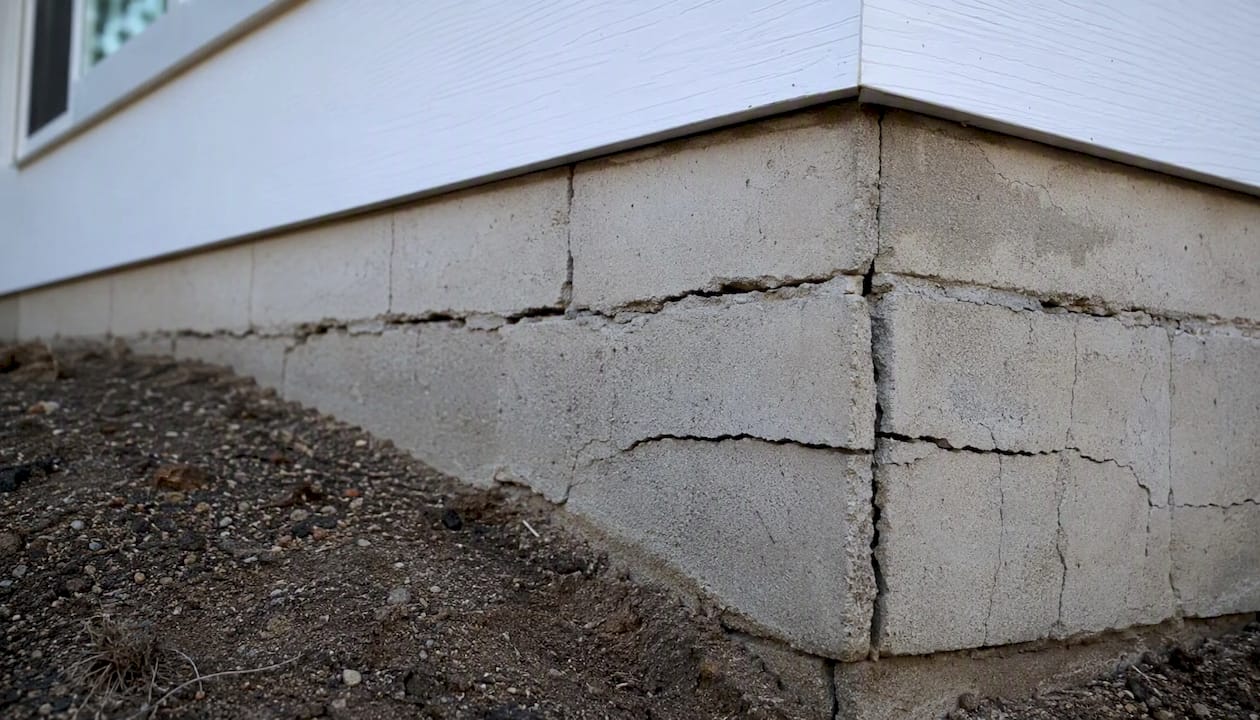
Large horizontal cracks in masonry walls are the most serious exterior indicator. Horizontal cracking typically means lateral soil pressure is pushing against the wall, which is an active structural problem. Stair-step cracks in brick or block, gaps at corners where walls meet, and bowed or leaning walls all warrant professional evaluation. Uneven grading that channels water toward the foundation, or visible separation between the foundation and the structure above it, are also red flags.
Interior signs to look for
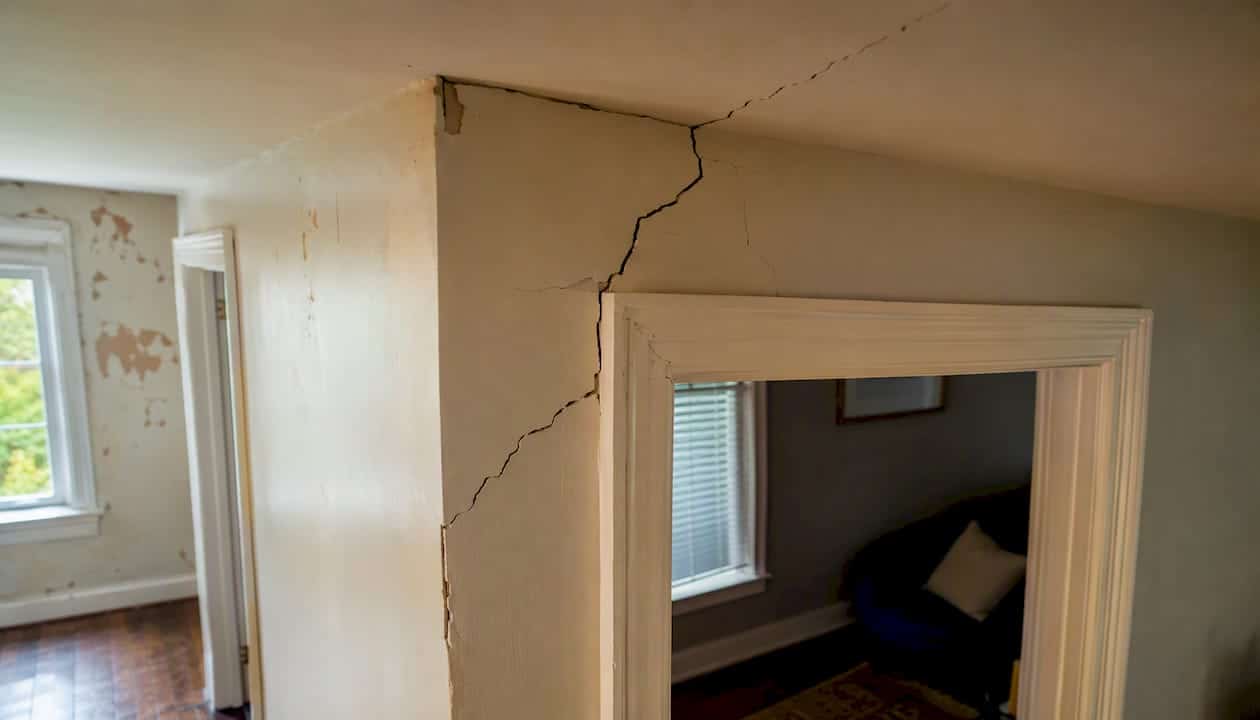
Inside the home, watch for doors and windows that stick or no longer close squarely. Diagonal cracks running from the corners of door frames or windows toward the ceiling often indicate differential settlement. A noticeable slope or sag in floors, especially in older homes, can point to pier failure or soil movement beneath the slab. Hairline cracks in drywall are common and usually cosmetic, but cracks wider than 1/4 inch, cracks that are actively growing, or any crack accompanied by water intrusion need immediate professional attention.
Urgent vs. monitor
Active water intrusion through foundation walls, visible wall bowing, and cracks that have widened since you last measured them are urgent. Photograph and measure every crack you find today, then photograph again in 30 days. That record tells an engineer whether movement is ongoing or historical, which directly affects repair scope and cost.
Pro Tip: Use a pencil to mark the ends of any crack with the date. If the crack grows past your mark, you have documented evidence of active movement, which is exactly what a structural engineer needs to assess severity accurately.
Pyrrhotite, an iron sulfide mineral sometimes present in concrete aggregate, is one example of a material-specific foundation risk that can cause long-term structural deterioration and carries its own disclosure and insurance complications. If your home was built with concrete from a quarry known to supply pyrrhotite-bearing aggregate, document it and disclose it.
Who should you hire to evaluate a foundation issue?
The professional you hire determines the quality of the report you get, and the report quality determines how smoothly your sale proceeds.
A general home inspector provides a broad visual assessment of the entire property. Inspectors are trained to identify signs of foundation movement, but they are not licensed engineers and cannot provide the structural analysis or repair specifications that lenders and attorneys require. An inspection typically costs $300–$500 and takes two to three hours.
A licensed structural engineer (PE) provides a formal engineering report that includes load analysis, crack mapping, soil observations, and specific repair recommendations. This is the report that satisfies FHA and VA lender requirements, supports your disclosure documentation, and gives investor buyers the confidence to make competitive offers. A pre-listing structural engineer report costs roughly $300–$1,000 depending on home size, region, and complexity, with most residential reports delivered within five to ten business days.
A foundation contractor provides repair estimates, not engineering assessments. Their scope is commercial: they want to sell you a repair. Always get an independent engineer’s opinion before accepting a contractor’s diagnosis.
The smartest sequence is: engineer first, contractor estimates second. Sellers who commission a pre-listing engineering report avoid the most common deal-killer in foundation transactions: an appraiser or buyer’s inspector flagging a structural issue mid-contract, triggering renegotiation or loan denial at the worst possible moment. Proactive documentation sets expectations and keeps the transaction on track.
What are your disclosure obligations when selling with foundation issues?
Disclosure is not optional. In most U.S. states, sellers must disclose known foundation defects, prior repairs, inspection reports, and permit history. Failing to disclose creates civil liability exposure under state consumer protection statutes, and “I didn’t know” is a difficult defense when an engineer’s report existed before closing.
The practical rule: if you know it, disclose it. That includes current cracks, past repairs (even ones that seemed minor), any engineering reports you have ordered, and any warranties that transferred with the property.
How buyer inspections and appraisals affect the transaction
When a buyer’s inspector identifies foundation concerns, the buyer typically has three options: request repairs, request a credit, or walk away. The outcome depends on the severity of the issue and how much documentation you have already provided. A seller who hands over an engineering report and contractor estimates at the time of the offer gives the buyer far less room to manufacture uncertainty.
Appraisal risk is a separate concern. FHA and VA loans require a property to be “safe, sound, and structurally secure,” and visible foundation problems will cause those appraisals to fail unless the issue is repaired before closing or escrowed with a funded repair commitment. Conventional loans are more flexible, but individual lenders vary. If your buyer is using FHA or VA financing and the foundation issue is visible, plan for a repair or a cash buyer.
Negotiation options
| Option | How it works | Best when |
|---|---|---|
| Repair before close | Seller completes repairs with permits and warranty | Equity available, timeline allows 4–12 weeks |
| Seller repair credit | Buyer receives credit at closing to fund repairs | Seller wants speed; buyer prefers to manage work |
| Escrow holdback | Funds held in escrow until repairs are verified | Lender requires repair but timeline is tight |
| Price reduction | List price lowered to reflect as-is condition | Cash buyer or investor; no financing contingency |
Should you repair first or sell as-is?
This decision comes down to one calculation: estimated net proceeds after repair versus estimated as-is sale price. Run both numbers before you commit.
The financial framework
Starts with your home’s estimated repaired market value, based on comparable sales in your area. Subtract the full cost of repairs, including contractor fees, permits, and carrying costs during the repair period. That is your repair-first net. Then estimate what a cash buyer or investor would pay as-is, accounting for the typical 10–15% discount that unrepaired foundation issues carry. Compare the two numbers. When the repair-first net is materially higher and you have the cash and time, repair first. When the numbers are close or you need to close fast, selling as-is is the rational choice.
Pros and cons
Repair first:
- Higher sale price and access to conventional, FHA, and VA buyers
- Transferable warranty builds buyer confidence
- Requires upfront cash ($4,000–$15,000+ depending on scope) and 4–12 weeks of repair time
- Permitted repairs with engineering sign-off reduce transaction risk and broaden lender acceptance
Sell as-is:
- Faster close, often 7–30 days with a cash buyer
- No upfront repair costs
- Lower sale price and a smaller buyer pool (cash buyers, investors, renovation-loan buyers)
- Full disclosure still required
Decision checklist
Answer yes or no to each:
- Do you have 60–90 days before you need to close?
- Do you have cash or a line of credit to fund repairs without depleting your equity?
- Is the repair scope moderate (under $15,000) and clearly defined by an engineer?
- Does the repair come with a transferable warranty?
- Is your local market strong enough that a repaired home will attract multiple offers?
If you answered yes to four or five of these, repair first is likely the better financial outcome. Three or fewer yeses, and selling as-is or offering a repair credit is probably the faster, lower-risk path.
What do foundation repairs cost and how long do they take?
If you decide to repair before listing, here are the common repair types, representative national cost ranges, and what to expect from the process.
| Repair type | Typical cost range | Typical timeline | Permit usually required |
|---|---|---|---|
| Crack injection (epoxy/polyurethane) | $500–$1,000 | 1–3 days | Rarely |
| Wall anchors / carbon fiber straps | $3,000–$8,000 | 2–5 days | Often |
| Wall stabilization (steel beams) | $4,000–$15,000 | 3–7 days | Yes |
| Helical or steel pier installation | $4,000–$12,000 | 3–10 days | Yes |
| Slab stabilization (mudjacking/foam) | $1,500–$6,000 | 1–3 days | Sometimes |
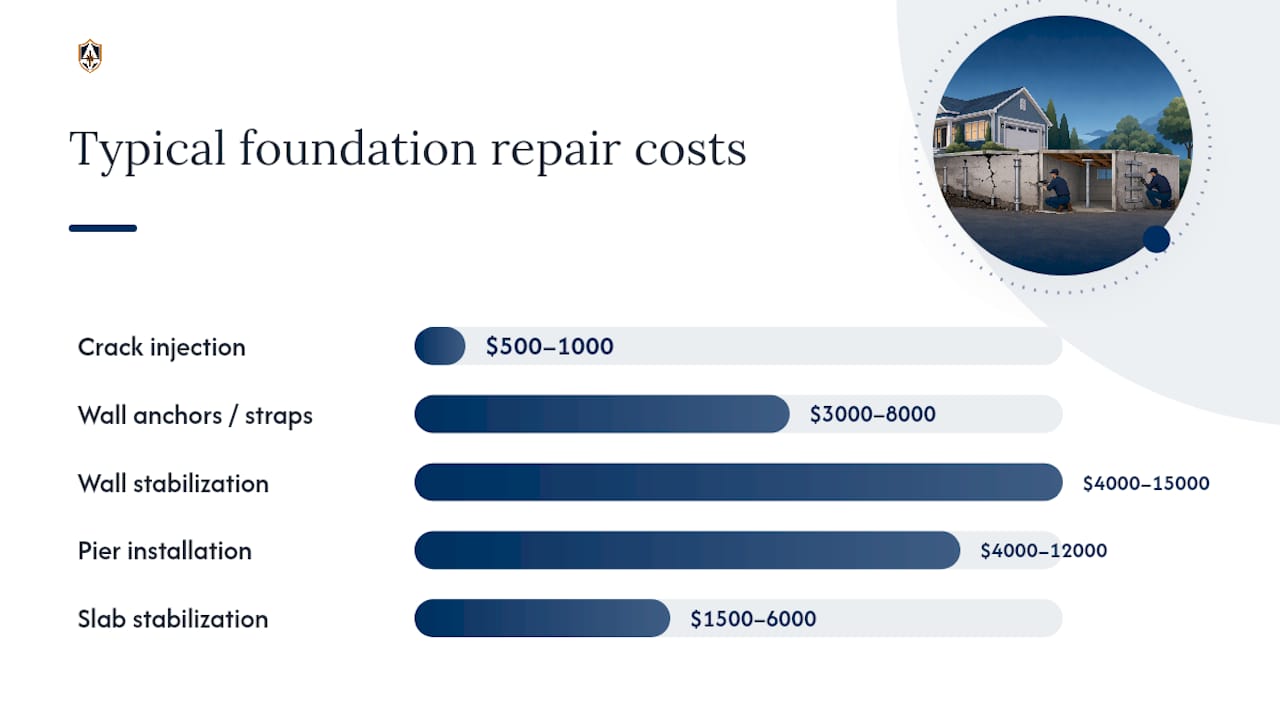
Cost ranges reflect national averages for residential foundation work. Regional labor costs, soil conditions, and access complexity will shift these figures.
Permits matter for two reasons. First, unpermitted repairs create disclosure complications and can trigger lender objections. Second, a permitted repair with an engineer’s sign-off and a transferable warranty is a marketable asset, not just a fixed problem.
Contractor vetting checklist
- Get three itemized written estimates from licensed contractors.
- Verify state contractor license and insurance (general liability and workers’ comp).
- Confirm the repair includes a permit pull and final inspection.
- Ask for before-and-after photos from comparable past jobs.
- Request a written transferable warranty with clear terms.
- Never pay more than 10–15% upfront before work begins.
Who will buy a house with foundation issues, and how do they finance it?
The buyer pool for a home with foundation problems is smaller than for a move-in-ready property, but it is not empty. Knowing who these buyers are and how they finance purchases lets you market directly to them.
Cash investors and rehabbers are the most common buyers for as-is foundation-issue homes. They do not need lender approval, they move fast, and they price based on after-repair value minus their cost to fix.
Owner-occupant renovators using renovation financing are an underserved segment worth targeting. The FHA 203(k) loan and the Fannie Mae HomeStyle loan both allow buyers to roll the cost of structural repairs into their purchase mortgage. Industry analysts note that marketing explicitly to renovation-financing buyers expands the qualified pool and can produce better offers than limiting outreach to cash-only buyers.
Developers and builders will consider foundation-issue properties when the land value or location justifies it, particularly in urban or infill markets.
Marketing tactics that attract the right buyers
- Lead your listing with the engineering report and contractor estimates. Sellers who present full documentation at listing attract investor competition because the homework is already done.
- Price the home to reflect the as-is condition clearly. Overpricing a damaged property wastes time and signals that the seller is not realistic.
- Highlight the upside: location, lot size, ARV (after-repair value), and any features that survive the repair.
- Note explicitly in the listing that renovation financing is applicable, which signals to buyer’s agents that their FHA 203(k) or HomeStyle clients can compete.
How do you find the right buyer or selling partner quickly?
Three paths exist, and the right one depends on your priorities.
-
List with a real estate agent when your local market is strong, you have time to repair or negotiate, and you want to maximize price. Choose an agent with documented experience selling distressed or foundation-issue properties. Ask specifically: “How many homes with structural issues have you sold in the past two years, and what was the typical days-on-market?” Ask how they handle appraisal contingencies and whether they recommend pre-listing engineering reports.
-
Sell to a cash investor when you need to close in 30 days or fewer, you cannot fund repairs, or the repair scope is large enough that the as-is discount is comparable to your repair-first net. Vet any investor by requesting proof of funds (a bank statement or letter of credit, not a pre-approval), a sample purchase contract, and a clear breakdown of any fees or closing cost assignments. Ask for references from recent sellers.
-
Use a direct-sale program when you want speed and certainty without the unpredictability of the open market. Direct-sale programs evaluate your home in its current condition, present a clear offer, and handle the process without repair contingencies or appraisal risk.
Questions to ask any buyer or program before signing:
- Do you have proof of funds or a committed financing source?
- What is your typical close timeline from signed contract to funded close?
- Are there any fees, commissions, or closing cost assignments I should expect?
- How do you handle foundation issues in your underwriting or offer calculation?
- What happens if your inspection turns up additional issues?
When we’d fix it and when we’d sell as-is
Most of the advice you will read on this topic leans toward one of two poles: “always repair to maximize value” or “just sell as-is and move on.” Neither is universally right.
Here is a more honest set of rules of thumb. Repair first when the net proceeds after repair are materially higher than the as-is price, when you have the cash to fund the work without borrowing against thin equity, and when the repair scope is clearly defined and comes with a transferable warranty. Those three conditions together make repair the rational choice.
Sell as-is when you need a 30-day close, when the cost to repair approaches or exceeds your available equity, or when the foundation issue is severe enough that even a repaired home will face appraisal scrutiny. In those situations, chasing a higher list price by spending money you may not recover is a losing trade.
The number that matters most is not the repair cost. It is the difference between your repaired net and your as-is net. If that gap is $10,000 on a $300,000 home and repairs cost $12,000, selling as-is is the better financial decision, full stop. Run that math before you call a contractor.
Selling a house with foundation problems? AAS Home Buyers can help
Foundation issues create real uncertainty in a traditional sale: appraisal risk, buyer contingencies, lender objections, and repair timelines that can stretch weeks. AAS Home Buyers is built for exactly this situation.

We evaluate homes in any condition, including those with active foundation issues, and we present multiple selling options tailored to your timeline and financial goals. If speed is the priority, our direct cash purchase path can close in days, with no repair requirements, no appraisal contingency, and no commission. If you want to maximize price without managing repairs yourself, our Retail Buyer Program connects your property with vetted buyers and handles the marketing and coordination. We also work with a network of vetted local agents for sellers who want a traditional listing with expert guidance on pricing and disclosure.
Before you call, gather what you have: an engineering or inspection report if you have ordered one, any contractor estimates, your permit history, and photos of the damage. The more documentation you bring, the faster we can evaluate your property and present your options.
Ready to know what your home is worth in its current condition? Get a no-obligation offer from AAS Home Buyers and have a clear number in hand before you decide your next move.
Sources
- Realtor
- Foundationcosts
- Foundation Issues and Home Sales: Disclosure and Impact | National Foundation Authority
- Pyrrhotite – Wikipedia
FAQ
Can you sell a house with foundation problems?
Yes. You can sell a house with foundation problems by repairing before listing, offering a repair credit, or selling as-is to a cash buyer or investor. Full disclosure and professional documentation are required regardless of which path you choose.
How much does a foundation problem reduce home value?
Do you have to disclose foundation issues when selling?
Yes. Most U.S. states require sellers to disclose known foundation defects, prior repairs, inspection reports, and permit history. Failing to disclose creates civil liability exposure under state consumer protection statutes.
Will FHA or VA buyers be able to purchase a home with foundation problems?
Not without repairs or an escrow holdback. FHA and VA loans require the property to be “safe, sound, and structurally secure,” so visible foundation problems will cause those appraisals to fail unless the issue is addressed before or at closing.
How fast can you sell a house with foundation issues?
With a cash buyer or a direct-sale program like AAS Home Buyers, a close in 7–30 days is realistic. A traditional listing with repairs typically takes 60–90 days depending on repair scope and market conditions.