
Short Sale Vs Foreclosure: Buy Again Sooner, 2–4 Years Vs 7 Years
A short sale usually causes less credit damage than a foreclosure and lets you buy another home sooner, often in a shorter waiting period compared to foreclosure. That said, a short sale requires your lender’s approval and doesn’t always move fast enough to beat an auction date. Which path fits your situation depends on your state’s deficiency laws, how cooperative your servicer is, and how much time you actually have left.
TL;DR:
- A short sale typically results in less credit damage and a shorter waiting period before qualifying for a new mortgage than a foreclosure.
- Lenders must approve a short sale, which can cause delays, whereas foreclosure is initiated involuntarily by lenders, often moving faster through courts or trustee sales.
- Negotiated short sales may allow for deficiency waivers and better reporting language, while foreclosures usually do not offer such flexibility.
- Buyers of short sales can expect longer approval times and better property condition, whereas foreclosed homes may be sold as-is with limited inspection access.
- In recourse states, lenders can pursue deficiency judgments after foreclosures, while non-recourse states limit this risk, influencing overall financial outcomes.
Table of Contents
- Short Sale vs Foreclosure: The Core Differences
- Short Sale: Seller Process And What Buyers Should Expect
- Foreclosure: Process, Timelines, And What It Means For You
- Weighing Short Sale vs Foreclosure As A Homeowner
- Buying A Short Sale Vs A Foreclosure: What Buyers Should Know
- Where To Find Distressed Listings And What To Do Next
- When A Lender-Approved Short Sale Isn’t Fast Enough
- What Homeowners Weighing These Options Should Prioritize
- Where To Learn More
- Sources
- FAQ
Short Sale vs Foreclosure: The Core Differences
A short sale is something you choose to pursue. You ask your lender to accept less than what you owe, and the lender has to sign off before anything moves forward. Foreclosure is not something you choose. Your lender initiates it after missed payments, and once it’s underway, you have far less say in the outcome.
That distinction shapes almost everything else. Because a short sale is voluntary and negotiated, sellers can often negotiate deficiency waivers, moving timelines, and how the debt gets reported. Foreclosure, run through the courts or a trustee sale depending on your state, offers none of that flexibility.
The financial and credit stakes differ sharply too:
- Who’s in control: You initiate and negotiate a short sale; the lender initiates and controls a foreclosure.
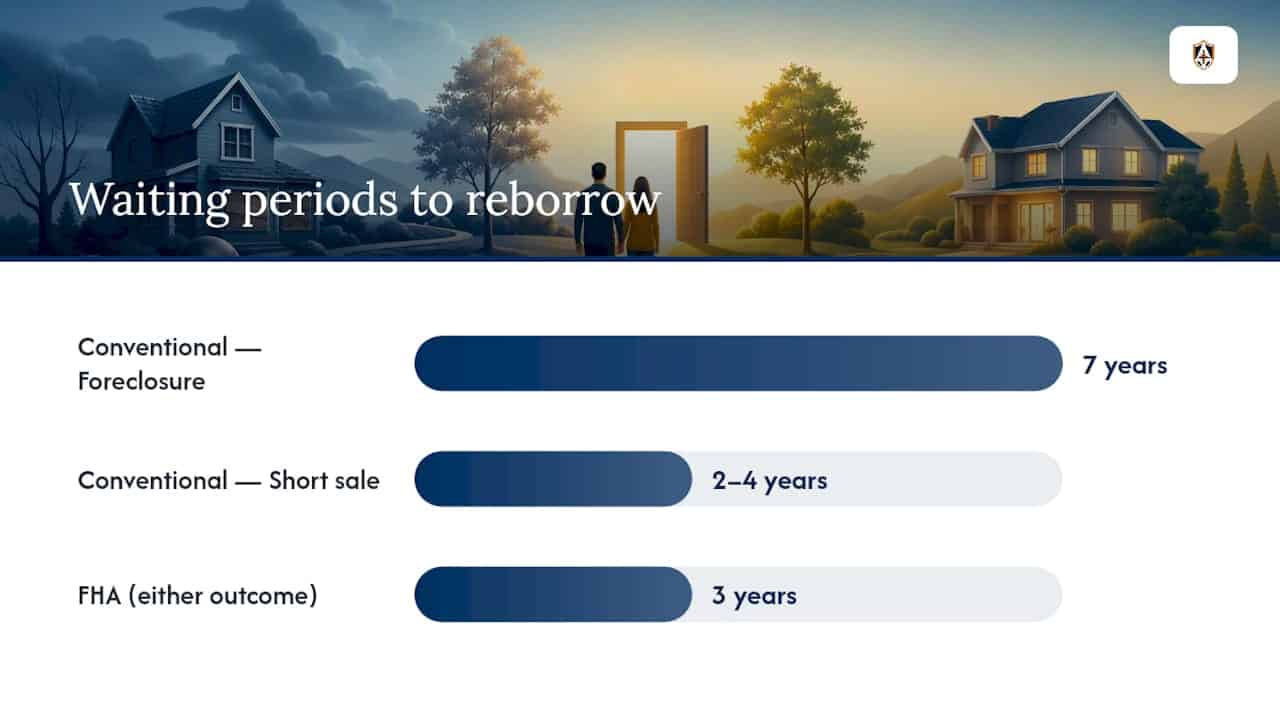
- Mortgage waiting periods: Conventional loans typically require about 7 years after foreclosure versus 2 to 4 years after a short sale; FHA loans often allow just 3 years for either, if you meet the criteria.
- Deficiency and tax exposure: Both can trigger a deficiency judgment or a 1099-C for forgiven debt, but a negotiated short sale gives you a real chance to get that liability waived in writing.
- Property condition: Short-sale homes are usually occupied and maintained; foreclosed homes, especially after sitting vacant, are frequently sold as-is with unknown repair needs.
Credit bureaus don’t treat these events identically, either. Experian’s research shows both hurt your score, but a short sale reported as “settled” or “paid for less than owed” tends to be viewed more favorably by future underwriters than an outright foreclosure notation.
Short Sale: Seller Process And What Buyers Should Expect
If you’re the homeowner, a short sale starts with proving hardship. Your lender wants documentation, not just a request.
- Submit a loss-mitigation package. This includes proof of financial hardship, income statements, bank records, and a hardship letter explaining what changed.
- Get the property valued. The lender orders a broker price opinion or appraisal to confirm the home won’t sell for more than the listed short-sale price.
- List and receive offers. Once approved for a short sale, your agent lists the home and submits qualifying offers to the lender’s loss-mitigation department.
- Wait on investor approval. This is where delays happen most, sometimes for weeks, because the loan investor (not just your servicer) has to sign off.
- Negotiate the release terms. Push for a written deficiency waiver and confirm how the debt will be reported to credit bureaus.
A 1099-C for forgiven debt is a real possibility, so talk to a tax professional before you sign anything. Some states and situations qualify for exclusions, but you shouldn’t assume that.
Pro Tip: Get the deficiency waiver and the credit-reporting language in writing before you close. Verbal assurances from a loss-mitigation rep mean nothing once the file is closed.
Buyers eyeing a short sale should expect a slower process than a normal purchase. Confirm occupancy status, negotiate inspection access early, and build extra time into financing contingencies since lender approval can stretch a 30-day close into three months or more.
Foreclosure: Process, Timelines, And What It Means For You
Foreclosures follow one of two paths, and which one applies depends entirely on your state. Judicial foreclosure goes through the court system, which usually gives homeowners more time and more chances to intervene. Non-judicial foreclosure, used in many Western and Southern states, moves through a trustee sale process outside the courts, often much faster.
That difference in speed matters more than most homeowners realize. In a judicial state, you might have many months of court proceedings; in a non-judicial state, the timeline from missed payment to auction can be dramatically shorter. If you’re in California, for example, the road to auction can move fast once a notice of default is filed. Our breakdown of the California foreclosure timeline walks through how that plays out.
Once the process concludes, the home typically goes to public auction. If no one bids enough to cover the debt, it becomes a bank-owned property, or REO, and gets resold, usually as-is with no repair credits and minimal disclosures.
- Deficiency risk: In recourse states, lenders can pursue you for the difference between what you owed and what the home sold for; in non-recourse states, purchase-money mortgage lenders generally cannot.
- Credit damage: Foreclosure produces a sharper score drop and a longer practical recovery window than a short sale in most cases.
- Buyer implications: REO purchases often move faster than short sales but carry more condition risk, since the bank rarely knows the home’s history.
Weighing Short Sale vs Foreclosure As A Homeowner
Every homeowner facing default is really choosing between control and speed. A short sale gives you more of the former; foreclosure, whether you want it or not, gives the lender the latter.
Short sale advantages:
- Potential deficiency waiver negotiated in writing
- Shorter conventional mortgage waiting period (2 to 4 years)
- Room to negotiate closing costs, relocation help, and reporting language
Short sale drawbacks:
- Requires lender approval, which can take months
- Sale isn’t guaranteed even after you find a buyer
Foreclosure trade-offs:
- Requires no negotiation or paperwork on your end
- Often carries a steeper credit hit and larger deficiency exposure
- Timeline is set by the court or trustee, not by you
If your situation doesn’t fit neatly into either box, a deed-in-lieu of foreclosure or a short payoff, where you pay a lump sum and keep the property, might do less damage than either option. State recourse laws change these calculations significantly, so what looks like the “worse” option on paper can be the safer one financially depending on where you live.
Buying A Short Sale Vs A Foreclosure: What Buyers Should Know
Short sales tend to sit closer to market value since a licensed agent and appraisal are involved. Foreclosures and REOs can be cheaper upfront, but you’re often trading price for risk.
- Price and condition: Short sales are usually livable and priced near market; foreclosures can be significantly discounted but sold with no seller disclosures.
- Inspection access: Short-sale sellers generally allow standard inspections; auction properties often don’t allow inspection at all, and REOs are strictly as-is.
- Financing timelines: Conventional and FHA loans require appraisals and underwriting windows that short sales can strain, since lender approval adds time on top of your own closing timeline.
- Title risk: Back taxes, liens, or unresolved HOA dues can surface late in either transaction type, so a title search early in the process isn’t optional.
Pro Tip: Order a preliminary title report before you get emotionally attached to a distressed listing. Liens on foreclosed properties are more common than most buyers expect, and they don’t disappear just because the bank sold the house.
Where To Find Distressed Listings And What To Do Next
Short-sale listings usually show up on the MLS with a short-sale flag, while bank-owned foreclosures are often listed through REO asset managers or found on county auction calendars.
If you’re the homeowner facing default, move quickly:
- Call your servicer’s loss-mitigation department the moment you know you’ll miss a payment.
- Contact a HUD-approved housing counselor at 1-800-569-4287 for free guidance on your options.
- Gather hardship documentation now (pay stubs, bank statements, a hardship letter) so you’re ready to submit quickly.
- Escalate if your servicer stalls. A CFPB complaint or a consultation with a foreclosure attorney can move a stuck file.
Once a sale date is set, your window can shrink to under 30 days to complete a short sale, so early action isn’t optional. Our guide on selling before foreclosure covers this timeline in more depth.
When A Lender-Approved Short Sale Isn’t Fast Enough
Sometimes there isn’t time left for a traditional short sale. Lender approval can take months you don’t have, and that’s where AAS Home Buyers offers a different route.
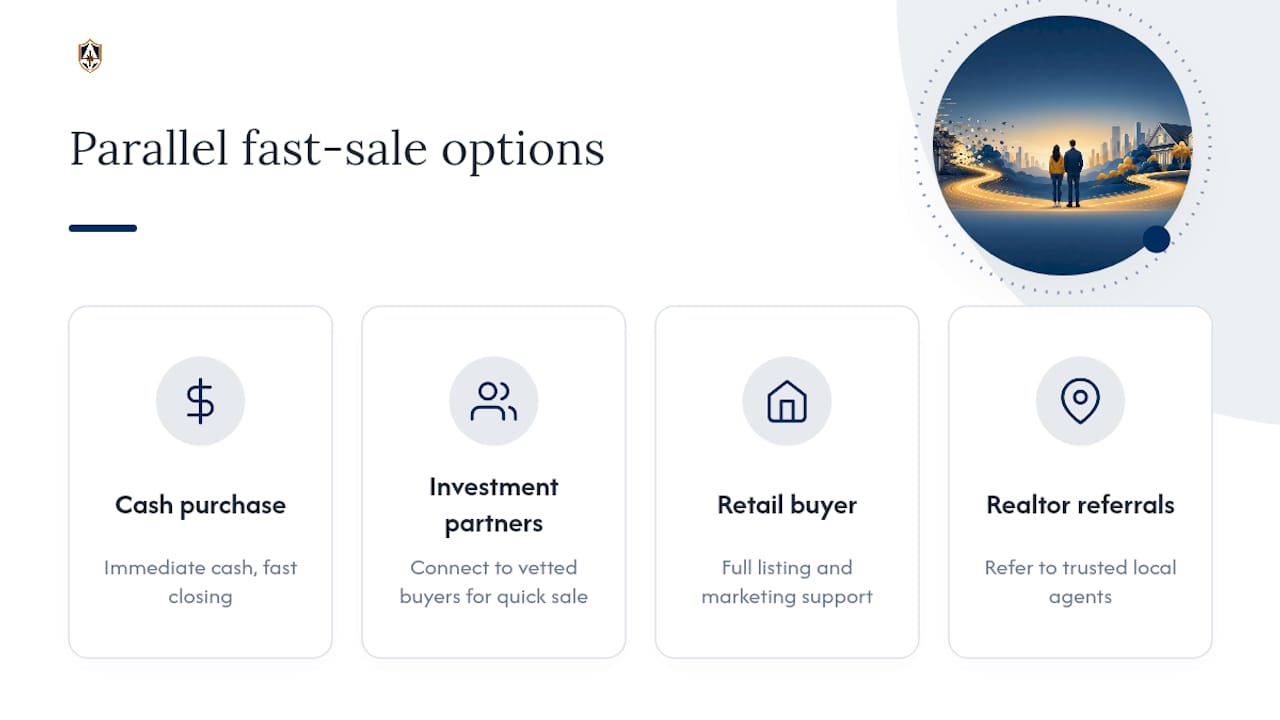
We provide a direct cash purchase, connect sellers with vetted investment partners, run a Retail Buyer Program with full listing and marketing support, and refer sellers to trusted local agents through our Realtor Referral Program. If you need certainty over negotiation, or you’re staring down an auction date with no time left to wait on investor approval, this can be worth exploring alongside your lender conversations.
To be clear: none of these options replace or bypass your lender’s short-sale approval requirements. They’re a parallel path, not a shortcut around your mortgage obligations. Reach out and we’ll walk you through transparent valuations with no hidden fees before you commit to anything.
What Homeowners Weighing These Options Should Prioritize
Contact your servicer and a HUD-approved counselor the day you realize you’ll miss a payment, not after. Get any deficiency waiver in writing, and if your timeline is too tight for a short sale, consider a short payoff or a fast-sale alternative before the auction date arrives. Protecting your ability to buy again later starts with the reporting language you negotiate today.
— AAS
Where To Learn More
For deeper reading on your rights and options, HUD’s foreclosure avoidance counseling network offers free guidance, and the Consumer Financial Protection Bureau accepts complaints against servicers that stall the process. Nolo’s short sale versus short payoff explainer is a solid starting point for understanding your alternatives.
This article is general information, not a substitute for advice from a qualified financial advisor. Consult a qualified financial professional about your own circumstances before acting on anything here.
Sources
- When can I get a mortgage after a short sale? | Nolo
- Short Sale vs Foreclosure: Which Is Really Better for You? | UseACalculator
- Short Sale vs Foreclosure: What’s the Difference? | Experian
FAQ
Is A Short Sale As Bad As A Foreclosure?
No. A short sale typically causes less credit damage than a foreclosure and comes with a shorter waiting period before you can qualify for another conventional mortgage. Foreclosure is generally treated more severely by both credit scoring models and future lenders.
Does A Short Sale Count As A Foreclosure?
No, a short sale is a voluntary sale you negotiate with your lender, while a foreclosure is an involuntary legal process the lender initiates. Credit reports distinguish between the two, and a short sale reported as “settled” is usually viewed more favorably than a foreclosure notation.
Who Pays Closing Costs In A Short Sale?
It depends on the terms your lender approves, but sellers often aren’t required to pay closing costs out of pocket in an approved short sale. Always read the approval letter carefully, since terms vary by lender and negotiation.
Can I Buy A House After A Short Sale?
Yes. Conventional lenders typically require about a 2 to 4 year waiting period after a short sale, and FHA loans may allow as little as 3 years if you meet specific conditions. That’s notably shorter than the roughly 7 years often required after a foreclosure.