
Three Step Checklist for U.S. Sellers: Legal, Tax, Net Proceeds Checks
Accepting the first offer on your house makes sense when it meets your goals and holds up under scrutiny: verified cash or strong financing, few contingencies, a closing timeline that works for you, and no tax or title issues waiting to eat into your proceeds. Sellers have full discretion to accept, counter, or reject any offer. Before you sign anything, run the numbers through IRS rules and a clear-eyed look at the terms, not just the price.
TL;DR:
- Accept the first offer only if it is verified as cash or fully underwritten, with minimal contingencies and a closing date aligned with your timeline.
- A higher financed offer may carry appraisal or inspection risks that can delay or reduce your net proceeds compared to a lower cash offer with faster closing.
- Counteroffers should be made one at a time and only after confirming proof of funds or preapproval, to avoid legal complications and dual contracts.
- Check for unresolved tax, title issues, or repair requests before finalizing a sale, as these can reduce your proceeds or delay closing.
- Most offers can be evaluated quickly within a few hours by verifying key terms and matching them to your goals, especially if speed and certainty outweigh a slightly higher price.
Table of Contents
- Quick checklist: when accepting the first offer is smart
- How to evaluate the components of an offer (price vs terms)
- Negotiation options and legal risks (counteroffers, sequencing, disclosures)
- Tax and closing checks to run before you accept
- When to accept quickly and when to take time: a 3-step decision flow
- Author perspective: our view on first offers
- If the first offer doesn’t fit: how AAS Home Buyers can help
- Sources
- FAQ
Quick checklist: when accepting the first offer is smart
Some offers are strong enough that waiting for a better one costs you more than it gains you. Before you decide, check the offer against a few objective markers instead of reacting to the number alone.
- All-cash or fully underwritten, with verifiable proof of funds or a current lender preapproval letter.
- Few or no contingencies, especially no financing contingency, and a short, clear timeline for any that remain.
- Reasonable earnest money held in escrow, with a closing date that matches your own moving plans.
- No unresolved tax or title issues that would shrink what you actually walk away with.
When an offer checks all four boxes, there is little upside in waiting. NAR’s multiple-offer guidance confirms that you, not your agent, make the final call on whether to accept, counter, or wait for more offers.
Pro Tip: Ask your agent to confirm proof of funds or preapproval in writing before you reply to any offer, not after.
How to evaluate the components of an offer (price vs terms)
The highest number on an offer sheet is not always the best deal. A financed offer at a higher price can carry appraisal risk, inspection demands, and a longer path to closing, while a lower cash offer might close in two weeks with almost no chance of falling through.
Proof of funds and preapproval letters are a starting point, not a guarantee. Preapprovals typically expire within 30 to 60 days and are not a binding commitment from the lender, so check the date and ask whether the buyer’s file has been fully underwritten. A cash sale removes the appraisal and financing steps entirely, which is why buyers who pay cash often close faster and with fewer surprises.
Other terms that shape what actually lands in your account at closing:
- Earnest money size, which signals how serious and financially able the buyer is.
- Appraisal gap clauses, which protect you if the home appraises below the offer price.
- Closing costs and credits, which some buyers ask sellers to cover.
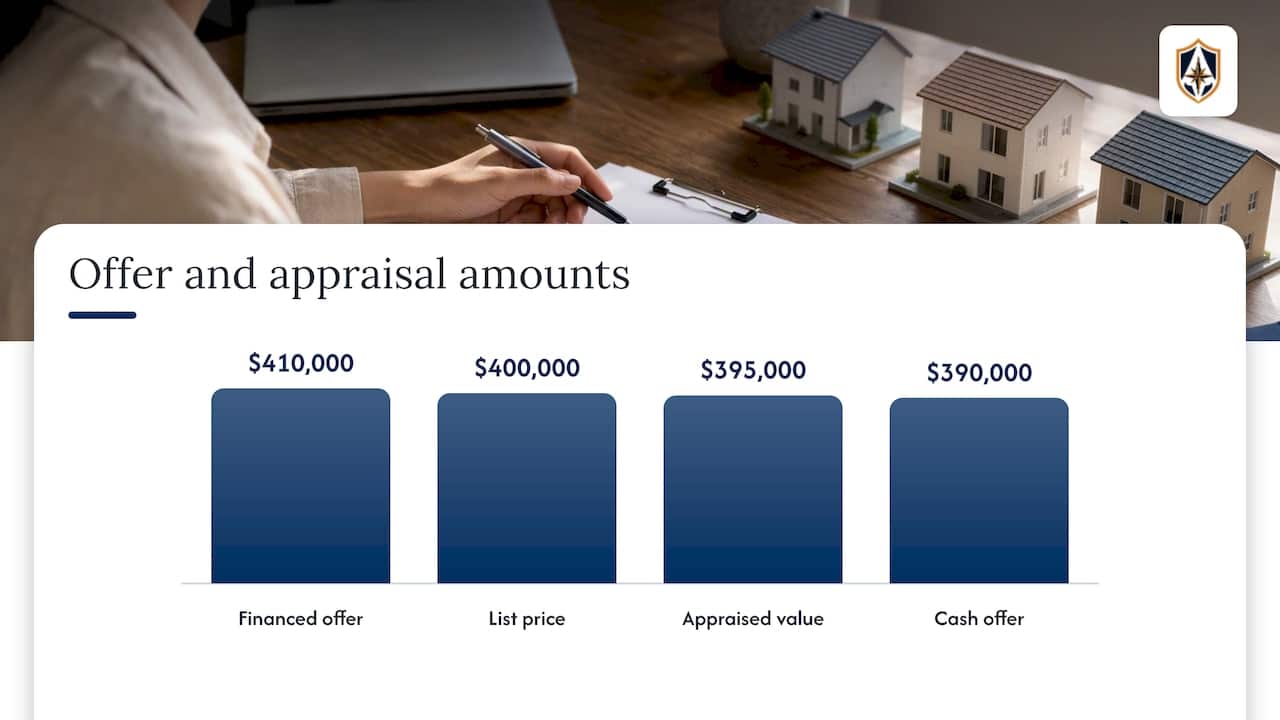
Say a home is listed at $400,000. A financed buyer offers $410,000 with an appraisal contingency and a 45-day close. A cash buyer offers $390,000 with no contingencies and a 14-day close. If the appraisal comes in at $395,000, the financed buyer can renegotiate or walk, leaving you back at square one; the cash offer, though $20,000 lower on paper, may net you a faster, more certain $390,000 with no risk of the deal collapsing. Risk-management guidance for sellers makes the same point: a full-price offer can be weaker than a lower-priced cash offer once financing and appraisal risk are factored in.
Negotiation options and legal risks (counteroffers, sequencing, disclosures)
Once you decide the first offer is not quite right, how you respond matters as much as what you say. A counteroffer legally voids the original offer, which means the buyer is no longer bound to their initial terms once you send one back. Get the sequence wrong and you can end up with no offer at all, or worse, two buyers who both believe they have a signed contract.
- Confirm financing or proof of funds first, before you respond to any offer, so you know what you are actually negotiating against.
- Counter one offer at a time. Risk-management guidance warns that countering multiple buyers simultaneously risks creating dual contracts if more than one buyer accepts your terms.
- Disclose competing offers carefully. Your agent can tell other buyers that multiple offers exist, but NAR’s Code of Ethics requires you, not the broker, to decide how offers are handled and presented.
- Set a firm deadline on any counteroffer, and put every communication in writing so there is a clear record of what was offered, countered, and accepted.
This sequencing protects you from the two costliest outcomes in a multiple-offer situation: losing a good buyer to a slow response, or accidentally committing to two buyers at once.
Tax and closing checks to run before you accept
The offer price is not what you keep. Before you sign, check what the sale will actually cost you at tax time and at the closing table.
- Ownership and use tests. IRS Publication 523 lets qualifying sellers exclude up to $250,000 of gain ($500,000 for married couples filing jointly) on the sale of a main home, provided you meet the ownership and use requirements. Our guide to the tax rules walks through how those tests apply.
- 1099-S reporting. A sale can still need to be reported to the IRS even when the exclusion covers your entire gain, so do not assume no tax means no paperwork.
- Agreed repairs and title issues. Unresolved repair requests or a title defect can delay closing or reduce what you net, so confirm these are resolved before the deal is final.
- Possession timing. Clarify exactly when the buyer takes possession, since a mismatch with your own move can create last-minute costs.
Working through an escrow or title company checklist early prevents these issues from surfacing after you have already committed.
When to accept quickly and when to take time: a 3-step decision flow
You do not need weeks to make a sound decision. Most first offers can be evaluated in a few hours if you work through the terms in order.
- Verify the terms that matter: proof of funds or lender preapproval, earnest money amount, and any contingency deadlines.
- Match the offer to your goals. If you need speed and certainty, a cash or firm-terms offer usually wins even at a lower price; if you have more time, consider inviting best-and-final offers.
- When unsure, issue one counter with a firm deadline, or bring in your agent, tax advisor, or attorney before you sign anything binding.
Pro Tip: If speed matters more than squeezing out the last few thousand dollars, weigh a firm cash offer heavily even when a competing bid looks higher on paper.
Author perspective: our view on first offers
Sellers who treat the first offer as an emotional test, wondering if it means their home is undervalued, tend to make worse decisions than sellers who score it against a checklist. Objective criteria protect your equity better than instinct does. We built AAS Home Buyers around that idea: direct purchases, a Retail Buyer Program, and vetted-agent referrals exist because no two sellers have the same goals, and certainty often matters more than a slightly higher headline number.
— AAS
If the first offer doesn’t fit: how AAS Home Buyers can help
If the first offer falls short on price, timeline, or certainty, you still have options beyond waiting and hoping the next one is better. We offer a few structured paths depending on what you need most:
- Direct Purchase by AAS Home Buyers, for a fast, no-showings sale.
- Retail Buyer Program, for sellers who want managed listing and marketing support.
- Purchase by Vetted Investment Partners, for another cash-buyer route.
- Realtor Referral Program, for sellers who decide a traditional agent fits better.

These options tend to help most when you are facing a tight timeline, a property that needs repairs a typical buyer would flinch at, or you simply want a guaranteed close instead of a financing contingency hanging over the sale. Visit our process page to see which option fits your situation and take the next step.
This article is general information, not a substitute for advice from a qualified financial advisor. Consult a qualified financial professional about your own circumstances before acting on anything here.
Sources
FAQ
Should I accept the first offer on my house?
Accept it if the offer meets your price and terms goals: verified cash or strong financing, minimal contingencies, and a workable closing timeline. If it falls short on any of those, NAR guidance confirms you can counter or wait for additional offers instead.
Does a counteroffer cancel the original offer?
Yes, a counteroffer legally voids the original offer, so the buyer is no longer bound to their initial terms once you respond with different ones. This is why sellers should counter one buyer at a time rather than negotiating with several simultaneously.
Will I owe taxes on the sale of my house?
Many sellers qualify to exclude up to $250,000 of gain ($500,000 for married couples filing jointly) under the ownership and use tests in IRS Publication 523. A sale can still require 1099-S reporting even when the exclusion covers the full gain, so check the requirements before assuming no paperwork is needed.
Is a cash offer always better than a higher financed offer?
Not always, but cash offers usually carry less risk since they skip the appraisal and financing contingencies that can delay or derail a financed sale. A lower cash offer can net you more in practice than a higher financed one if the financed deal falls through or requires renegotiation after appraisal.
How long does it take to close after accepting a first offer?
Timelines vary by financing type and contingencies: cash sales can close in as little as one to two weeks, while financed sales typically take several weeks longer due to underwriting and appraisal. Confirm the buyer’s expected timeline in writing before you accept, especially if your own move depends on a specific date.