
Sell a Vacant U.S. House in 7–30 Days Without Losing Proceeds
The fastest realistic paths to sell a vacant house are a direct cash offer, closing in as little as 7 to 30 days, or a managed listing with virtual staging that can move a sale in weeks instead of months. Cash offers trade some sale price for speed and zero repairs; a staged, well-priced listing tends to net more but takes longer. If the home is inherited, probate paperwork often has to be settled before either option can move forward.
TL;DR:
- Cash offers typically close within 7 to 30 days and require no repairs or staging, but usually come at a lower sale price.
- Virtual staging costs under $200 and can significantly reduce days on market, especially when combined with professional photos and virtual tours.
- Pricing a vacant home slightly below market value in the first two weeks encourages multiple offers and prevents long vacancy penalties.
- Inherited properties require legal authority through probate before listing or selling, and legal costs can add to overall expenses.
- Maintaining security, regular yard upkeep, and verifying insurance coverage are essential to protect the vacant property during the selling process.
Table of Contents
- How Do You Sell a Vacant House Quickly?
- Protecting Your Vacant Home While It’s on the Market
- Does Staging Actually Help Sell an Empty House Faster?
- What’s the Right Price for a Vacant Listing?
- What Selling As-Is or for Cash Really Looks Like
- Legal Steps for Selling an Inherited Vacant House
- Marketing a Vacant Home Without Live-In Charm
- How Long Does It Take to Sell a Vacant House?
- What Does It Really Cost to Sell a Vacant House?
- Common Risks When Selling a Vacant Home and How to Avoid Them
- Preventing Vandalism and Squatting in an Empty House
- Why We Think Speed and Flexibility Should Come Before Price Assumptions
- Get a No-Obligation Offer on Your Vacant Home
- Sources
- FAQ
How Do You Sell a Vacant House Quickly?
Vacant homes carry a real cost the longer they sit. Studies cited by Stuccco’s guide to selling vacant houses show that vacant properties tend to sell for less and spend longer on the market compared to occupied homes. That penalty is exactly why choosing the right path matters more for a vacant property than for one you’re living in.
Here’s how the main options stack up:
- Cash buyer or investor offer. These close fast, often 7 to 30 days, with no staging, repairs, or inspection contingencies required. You’ll typically accept a lower price in exchange for certainty and speed. Investors also tend to prefer vacant homes because there’s no tenant or occupant to coordinate around, which is one reason this route moves quickly.
- Agent-led listing with staging. This takes longer (often 30 to 90 days to closing) but usually nets a higher sale price, especially when paired with virtual or physical staging.
- Sell as-is through an investor program. A middle path: skip repairs and staging, but get more structured marketing than a pure cash deal.
- FSBO (For Sale By Owner). Rarely the fastest option for a vacant home, since you handle showings, marketing, and security alone. It fits owners with real estate experience and time to spare.
Protecting Your Vacant Home While It’s on the Market
An empty house is more vulnerable than an occupied one, and every week without eyes on the property increases risk. A short list of low-cost steps closes most of the gaps that cause damage, insurance denials, or spooked buyers.
- Change the locks and reset any smart-lock codes as soon as the last occupant moves out.
- Call your insurer to check the vacancy clause on your policy. Many standard homeowner policies limit or void coverage once a home sits empty for 30 to 60 days, so confirm this before you list, not after a claim.
- Set a maintenance rhythm: mow the lawn every one to two weeks, check for leaks monthly, and run the HVAC system periodically to prevent mold and stale air.
- Post visible “monitored” or alarm signage, and ask a trusted neighbor to keep an eye on the property between showings.
Pro Tip: Ask your agent or buyer’s title company for a walkthrough checklist before closing. Small issues, like a leaking pipe or a tripped breaker, are far cheaper to catch in week two of vacancy than in week eight.
Does Staging Actually Help Sell an Empty House Faster?
Buyers struggle to picture themselves in bare rooms. Empty spaces often look smaller, and photos of blank walls and echoing floors do little to create urgency. That’s the psychology behind why vacant listings tend to underperform, and it’s also why staging remains one of the highest-leverage moves available to a seller with no furniture on-site.
Cost and speed vary widely by method:
- Virtual staging typically runs under $200 for an entire home using modern AI-based services, according to the agent playbook from Tech & Real Estate, and photos can be turned around in a day or two.
- Full physical staging costs $3,000 to $5,000 and takes longer to schedule and install, but it lets buyers experience scale and flow in person during showings.
- Selective staging of just the living room, primary bedroom, and kitchen, recommended by local coverage like the Greeley Tribune, controls cost while still hitting the rooms buyers judge most.
Agents combining professional photography, virtual staging, and 3D tours with aggressive early pricing report 40 to 70 percent reductions in days on market for vacant homes. If you use virtual staging, label the images clearly. Buyers deserve to know which furniture is real and which is rendered, and most listing platforms require the disclosure anyway.
What’s the Right Price for a Vacant Listing?
Pricing a vacant home too high compounds the vacancy penalty instead of offsetting it. A stale listing signals to buyers that something’s wrong, even when the real issue is just an ambitious asking price.
A few practical moves keep momentum on your side:
- Pull comps from the last 30 to 60 days rather than relying on older data. Empty homes sit long enough that outdated comps can mislead you.
- Consider pricing slightly below market value at launch to generate competing offers in the first two weeks, when buyer interest peaks.
- Use AI-assisted pricing tools alongside your agent’s comparative market analysis. Neither should be the only input.
- Write listing copy that addresses vacancy honestly. Mention move-in readiness or flexible closing timelines rather than ignoring the obvious.
- Include a floor plan and a 3D virtual tour so buyers understand room sizes and layout without relying on furniture for scale.
- Decide upfront whether you’ll offer repair credits or require buyers to accept the home as-is. Credits often close faster than repair negotiations do.
What Selling As-Is or for Cash Really Looks Like
Selling as-is means skipping repairs, staging, and often the traditional listing process altogether. For owners who can’t afford upfront work or need certainty over maximum price, this is usually the most practical route.
- Timeline. Most cash offers close in 7 to 30 days once you accept, compared to 30 to 90 days for a traditional financed sale.
- Net proceeds. You’ll skip commission (often 5 to 6 percent), repair costs, and staging fees, which narrows the gap between a cash offer and a higher-priced traditional sale more than most sellers expect.
- Vetting the buyer. Ask for proof of funds, a clear closing timeline, and a written purchase agreement with no vague contingencies. Walk away from any buyer who won’t provide documentation.
- Matching the right program. A direct purchase makes sense if speed and certainty matter most. A managed program, like AAS Home Buyers’ Retail Buyer Program, fits owners who want professional marketing without handling repairs themselves.
Pro Tip: If a buyer pressures you to sign before you’ve verified proof of funds, treat that as a red flag, not a sign of urgency. Legitimate cash buyers expect you to check.
For a full breakdown of how to vet cash offers, review the timeline and paperwork before agreeing to any purchase price.
Legal Steps for Selling an Inherited Vacant House
If you inherited the property, the paperwork often matters more than the price. Executors generally must secure Letters Testamentary or Letters of Administration before marketing or selling the home. Attempting to list it without that legal authority risks a canceled sale or title complications down the line, according to probate guidance from Paul Owens Law.
- Confirm your legal authority with the probate court before signing any listing agreement.
- Ask an estate attorney whether your state allows a sale to proceed during probate, since rules vary widely.
- Check whether the home’s insurance vacancy clause still applies once ownership transfers, since coverage gaps often surface right after inheritance.
- Expect buyers and title companies to request the death certificate, probate court documents, and proof of your appointment as executor or administrator.
For a step-by-step walkthrough of the process, AAS Home Buyers’ guide to selling an inherited house through probate covers the sequence in more detail, and Jeff Sells San Diego’s overview of inherited-home steps offers a useful second reference for heirs navigating the same questions.
Marketing a Vacant Home Without Live-In Charm
Vacant listings need to work harder online because buyers can’t feel the home’s character in person as easily. A few tactical choices make up for that gap.
- Include a floor plan and a 3D tour on every listing so buyers understand scale before they schedule a showing.
- Offer flexible showing windows, and use a smart lockbox so agents can access the property without coordinating a key handoff every time.
- Run targeted ads and social posts featuring your best staged images. Vacant homes benefit disproportionately from strong visuals since there’s nothing else pulling attention.
- Add a short FAQ to the listing addressing vacancy directly: why the home is empty, whether it’s move-in ready, and what the timeline for closing looks like.
How Long Does It Take to Sell a Vacant House?
The timeline depends almost entirely on which path you choose at the start. A cash sale can close in as little as 7 days from accepted offer, though 14 to 30 days is more typical once title work and final walkthroughs are factored in.
A traditional listing with an agent runs longer. Expect roughly one to three weeks to prep, stage, and photograph the home, then another two to six weeks on market before an offer comes in, depending on pricing and local demand. Add another 30 to 45 days for a financed buyer’s mortgage underwriting, inspection, and appraisal process. That puts most traditional vacant-home sales somewhere between 60 and 90 days from listing to closing.
Inherited properties add a variable that can’t be rushed: probate. If Letters Testamentary haven’t been issued yet, that step alone can take weeks to months depending on the county and whether the estate is contested. Executors who secure legal authority before listing avoid the most common cause of delayed or canceled inherited-home sales.
Sellers using a managed program, where an investor or Retail Buyer Program handles marketing without asking you to relocate for staging, often land in the middle: faster than a traditional agent sale, more structured than a pure cash deal. Setting expectations early, and choosing the path that matches your actual timeline, prevents the frustration of watching a listing sit past the point where price cuts start looking desperate.
What Does It Really Cost to Sell a Vacant House?
Every path to selling a vacant house carries costs beyond the obvious asking-price math, and vacancy adds its own line items that occupied sellers don’t face.
Ongoing carrying costs accumulate the entire time the home sits unsold: utilities kept on for showings, lawn care, a vacant-property insurance policy or endorsement, and periodic maintenance visits. Budget for these monthly, since a home that takes 90 days to sell racks up three months of holding costs on top of everything else.
Marketing and prep costs vary by path. Virtual staging runs under $200 for a full home, while physical staging runs $3,000 to $5,000. Professional photography typically adds a few hundred dollars, and a 3D tour service adds a similar amount. Minor repairs and touch-ups (fresh paint, fixed fixtures, cleared debris) can run anywhere from a few hundred to a few thousand dollars depending on the home’s condition.
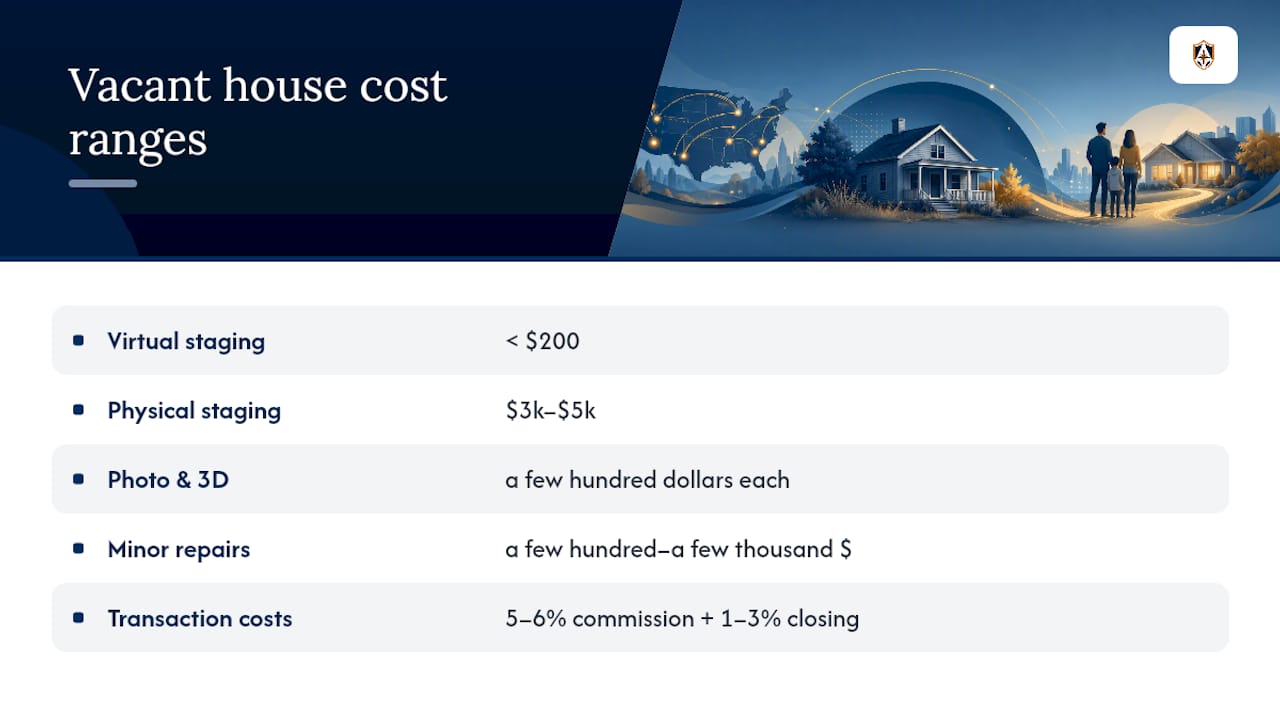
Transaction costs hit at closing regardless of path: agent commissions typically run 5 to 6 percent of sale price in a traditional sale, plus closing costs of 1 to 3 percent for title work, transfer taxes, and escrow fees. Cash and as-is sales usually eliminate commission and often cover some closing costs, which is where the math starts to favor speed over a higher list price for owners paying carrying costs out of pocket.
Legal costs apply if the property is inherited: probate filing fees and attorney costs vary by state and estate complexity, and they should be factored in before setting a closing timeline.
Common Risks When Selling a Vacant Home and How to Avoid Them
Vacant homes carry a specific set of risks that occupied listings don’t, and most of them are preventable with early action rather than damage control later.
Price erosion from time on market. The longer a vacant home sits, the more buyers assume something’s wrong, and price cuts start looking like concessions rather than corrections. Fresh comps and a realistic launch price prevent this spiral before it starts.
Insurance gaps. Standard homeowner policies often restrict or void coverage once a home has been empty for 30 to 60 days, according to guidance from Inherited Property Match. Confirm your policy’s vacancy clause immediately, and consider a dedicated vacant property policy if your carrier won’t extend standard coverage.
Deferred maintenance surprises. Empty homes hide problems: a slow leak, a failed sump pump, or pest activity can go unnoticed for weeks without daily use. A biweekly walkthrough or a monitoring service catches these before a buyer’s inspector does.
Buyer perception problems. Bare rooms, dust, and a stale smell all signal neglect even when the home is structurally sound. Basic cleaning, air circulation, and selective staging address this directly.
Financing friction. Some lenders scrutinize vacant-home appraisals more closely, especially if the home shows signs of deferred maintenance. Addressing visible repairs before listing reduces the odds of an appraisal-triggered renegotiation.
Preventing Vandalism and Squatting in an Empty House
An unsecured vacant home is a target, and squatting has become enough of a national concern that sellers can’t treat it as a rare edge case anymore. A few concrete habits reduce the risk substantially.
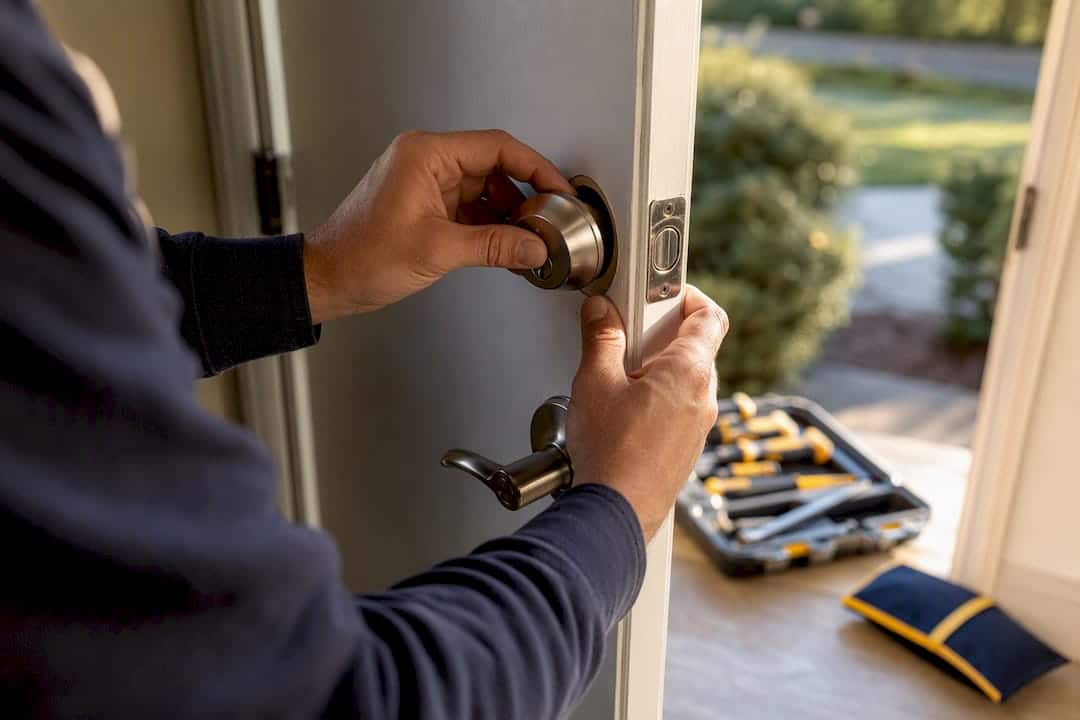
Change every lock and garage code the moment the home is empty, and never rely on a code a previous occupant, contractor, or agent might still know. Install visible security signage even if you haven’t hired a monitoring company. Studies on vacant housing effects, including NBER research on vacancy’s neighborhood impacts, point to visible occupancy signals as a meaningful deterrent to both vandalism and unauthorized entry.
Ask a neighbor to collect mail and flyers and report any unfamiliar activity. A pile of newspapers or unclaimed packages is one of the clearest signs a house is unwatched. Keep the lawn mowed and exterior lights on a timer. Lights that cycle on at dusk are a low-cost way to make the home look occupied from the street.
Limit who has access. Smart lockboxes with time-stamped entry logs let you track exactly who entered and when, which matters both for security and for liability if damage occurs during a showing. If the home will sit vacant for an extended stretch, a monitored alarm system or a periodic drive-by check from a local property manager closes the remaining gap between listing day and closing day.
Why We Think Speed and Flexibility Should Come Before Price Assumptions
Most advice about selling a vacant house assumes every seller wants the same thing: the highest possible price, no matter the timeline. That assumption doesn’t hold for owners juggling two mortgage payments, an inherited property tied up in probate, or a home that needs more repair work than they can front.
This company was built around the idea that the “right” sale depends on the seller’s actual situation, not a one-size-fits-all script. They offer direct cash purchases, a managed listing and marketing program, and connections to vetted local agents, so owners can choose based on their own priorities instead of defaulting to whatever path a single agent happens to offer. The valuations provided are transparent, with no hidden fees, because sellers under time pressure deserve clarity, not surprises at closing.
If speed matters most, a direct purchase usually makes sense. If you have a few weeks to spare and want higher proceeds, a managed listing with staging and marketing support closes that gap without asking you to handle it alone.
— AAS
Get a No-Obligation Offer on Your Vacant Home
If carrying costs, security worries, or a probate deadline are pushing you toward a faster sale, you don’t have to choose between a lowball cash offer and months of staging and showings on an empty house. One option offered is a data-driven valuation and a choice between a direct purchase, a managed listing program, or a referral to a vetted local agent, all without repair costs or hidden fees eating into your proceeds.

Our transparent 3-step process starts with a property evaluation, whether the home is move-in ready or needs significant work, and ends with a closing timeline built around your schedule, not a generic script. Request a no-obligation cash offer or valuation today, and see which path fits your vacant property before another month of carrying costs passes.
This article is general information, not a substitute for advice from a qualified financial advisor. Consult a qualified financial professional about your own circumstances before acting on anything here.
Sources
- The Complete Guide to Selling a Vacant House for the Max Value
- How to Sell a Vacant Home Fast: The Complete Agent’s Playbook | Tech & Real Estate
- Letters Testamentary & Letters of Administration
FAQ
Is It Harder to Sell a Vacant House?
Yes, in most cases. Vacant homes sell for an average of $11,306 less and spend about six extra days on the market compared to occupied homes, largely because empty rooms make it harder for buyers to picture themselves living there.
What Is the Hardest Month to Sell a Home?
Winter months, particularly December and January, tend to see the slowest buyer activity in most U.S. markets, since fewer families want to move during the holidays or mid-school-year. Vacant homes feel this slowdown more sharply, since there’s no lived-in warmth to offset a quiet showing season.
What Can I Do With a Vacant House?
You can sell it as-is to a cash buyer or investor, list it traditionally with staging and marketing support, or hold it as a rental if you’re not ready to sell. For inherited properties, confirm probate status first, since that determines which options are even available yet.
What Should I Do With a House I Can’t Sell?
Revisit your pricing against current comps first, since an overpriced listing is the most common reason a vacant home stalls. If price isn’t the issue, consider a direct cash sale or AAS Home Buyers’ Retail Buyer Program, both of which are built for homes that haven’t moved through traditional channels.