
Selling a Water Damaged House: Your Complete Options Guide
Yes, you can sell a water-damaged house, and the right next step depends on what you value most: maximum price or maximum speed. If your damage is cosmetic and your budget allows repairs, fixing the problem before listing usually nets the highest return. If repairs would exceed what the sale price justifies, or you simply need to move on now, selling as-is to a cash buyer or through a managed sale program protects your time and your sanity.
Three paths cover almost every situation:
- Repair and list traditionally — best when damage is contained, funds are available, and you can wait 60 to 90 days for full retail value.
- Sell as-is to an investor or cash buyer — best when repair costs are high, timelines are tight, or the damage involves mold or structural issues.
- Use a managed Retail Buyer Program — best when you want a guided, guaranteed-close alternative without handling contractors and showings yourself.
Pro Tip: Before you decide anything, get a professional inspection or request a no-obligation cash offer. That single step tells you whether repairs will pay for themselves or whether an as-is sale protects more of your equity.
Key Takeaways
Selling a water-damaged house successfully depends on accurate documentation, an honest repair-versus-as-is calculation, and matching your listing to the buyer type that fits your timeline.
| Point | Details |
|---|---|
| Document everything early | Collect moisture readings, contractor invoices, permits, and remediation certificates before you list. |
| Run the repair ROI math | Compare repair cost plus holding costs against the value gap between repaired and as-is offers. |
| Disclose fully, factually | State the cause, timeline, repairs, and warranties without guarantees or soft language. |
| Match buyer type to your path | Target financed buyers when repaired, investors or cash buyers when as-is. |
| Consider AAS Home Buyers for speed | Its direct cash purchase, Retail Buyer Program, and vetted agent referrals fit sellers facing urgent timelines or high repair costs. |
Table of Contents
- How to Assess Water Damage Before You Sell
- Should You Repair Before Listing or Sell As-Is?
- What’s the Right Price for a Water-Damaged House?
- What Do You Have to Disclose About Water Damage?
- Who Buys Water-Damaged Homes, and Where Do You Find Them?
- How Do Insurance Claims Affect a Water-Damaged Home Sale?
- When Does Water Damage Mean You Need Mold Remediation?
- How to Handle Buyer Requests and Get to Closing
- AAS Home Buyers’ Solution for Water-Damaged Properties
- What Conventional Advice Gets Wrong About Selling Damaged Homes
- Get a Cash Offer or a Guided Sale Path From AAS Home Buyers
- Sources
- FAQ
How to Assess Water Damage Before You Sell
Every water damaged house sale starts with an honest diagnosis. Guessing at severity costs sellers money twice: once when they under-repair and scare off buyers, and again when they over-repair a problem that didn’t need it.
Call these three people first, in this order:
- A licensed inspector who specializes in moisture and structural assessment, not a general home inspector doing a favor. They’ll identify whether damage is surface-level or has reached subfloor, framing, or drywall cavities.
- A restoration contractor certified in water mitigation, who can quote drying, demolition, and rebuild costs separately so you know which numbers are negotiable.
- A plumber, if the source was a pipe, appliance, or fixture, to confirm the leak is fully stopped and won’t recur after you list.
Skipping the inspector and going straight to a contractor’s estimate is the single most common mistake sellers make. A contractor is incentivized to quote the repair, not necessarily to tell you the repair is unnecessary or the damage is worse than it looks on the surface.
Immediate mitigation steps that protect both health and value
Before any paperwork gets started, stop the damage from spreading. Shut off the water source at the main or the fixture. Remove standing water and run fans or a dehumidifier within 24 to 48 hours to limit mold growth. Secure any affected electrical outlets or panels, and photograph everything before you touch it. Working with an experienced local agent and getting a pre-list inspection done early tends to produce smoother sales than waiting until a buyer’s inspector finds the issue first.
Documentation to collect, starting day one:
- Dated, timestamped photos of the damage as you find it, before and during any drying or repair work
- Moisture meter readings from the inspector, ideally repeated a few days apart to show the trend
- Every contractor invoice, itemized by task, not lumped into one total
- Permits pulled for any structural, electrical, or plumbing repair work
- A mold remediation certificate if any mold was found and treated, issued by the remediation company
Buyers and their lenders will ask for this paperwork. Having it organized in one folder, physical or digital, before you ever list the house signals competence and cuts weeks off negotiation.
Pro Tip: Check any restoration contractor or cash buyer you’re considering against the Better Business Bureau before signing anything. A quick reputation check takes ten minutes and can save you from a lowball offer or a botched repair job.
Should You Repair Before Listing or Sell As-Is?
The math comes down to three numbers: repair cost, the value uplift repairs actually create, and how much time you can afford to lose. Run those numbers before you commit to either direction.
Repairing first works when you’re trying to attract a financed retail buyer, since most conventional, FHA, and VA lenders won’t approve a loan on a house with active leaks, exposed subfloor, or unresolved mold. Selling as-is works when you’re targeting an investor or cash buyer, who prices the home based on its current condition and their own renovation budget, not a lender’s checklist.
Estimate your ROI on repairs using this formula:
- Get two or three contractor quotes for the actual repair scope, not a rough guess.
- Pull recent comps for fully repaired homes in your area to establish a realistic post-repair value.
- Subtract your repair cost, holding costs (mortgage, insurance, utilities during the work), and a buffer for surprises from that post-repair value.
- Compare that number to what a cash buyer would offer today, as-is.
If the gap between repaired value and cash-offer value is wider than your total repair and holding costs, repairing usually wins. If it’s narrower, or the repair scope keeps expanding once contractors open walls, selling as-is protects more of your equity than it costs you.
Which repairs typically pay back, and which don’t:
- Usually worth it: fixing the root cause of the leak, replacing damaged subfloor, resolving mold at its source, and repairing any drywall that’s visibly bowed or stained.
- Usually cosmetic only, skip unless cheap: repainting unaffected rooms, upgrading fixtures unrelated to the damage, or replacing flooring in areas the water never reached.
- Gray area, worth a conversation with your agent: full kitchen or bathroom remodels triggered by water damage, since buyers sometimes prefer to choose their own finishes anyway.
Partial repairs paired with a price credit at closing often split the difference well. You fix the structural and safety issues that would kill a financed sale, then offer a documented credit for the remaining cosmetic work. This keeps the house financeable while letting the buyer control the final finish choices, and it avoids you spending money on renovation decisions a picky buyer might redo anyway.
Bankrate’s guidance on selling as-is confirms this instinct: as-is sales make the most sense when repair costs exceed your budget or your timeline doesn’t allow for a full renovation cycle. There’s no shame in that math working out against repairs. It’s simply a different buyer pool with different expectations.
What’s the Right Price for a Water-Damaged House?
Pricing depends entirely on which buyer pool you’re targeting, and getting this wrong is how sellers leave money on the table or scare off every serious offer in the first two weeks.
Appraisers and lenders treat active or unresolved water damage as a red flag. FHA and VA loans in particular require the home to meet minimum property standards, meaning exposed subfloor, active leaks, or visible mold can halt financing entirely until repairs are complete. Conventional lenders have more flexibility but will still often require an escrow holdback or proof of repair before closing. This is exactly why unrepaired, water-damaged homes skew toward cash and investor buyers rather than financed retail buyers.
Discount ranges vary by scope, but a few factors move the number the most:
- Whether the damage is contained to one area or has spread through multiple rooms or floors
- Whether the cause has been permanently fixed or is still a question mark
- Whether mold is present, confirmed, and remediated versus suspected but untested
- Whether structural elements like subfloor, joists, or framing were affected
Statistic Callout: Cash buyers have become a larger share of the market in recent years, and damaged properties are one of the categories where that shift shows up most, since cash buyers can close without waiting on a lender’s inspection contingencies.
Four tactical pricing approaches to choose from:
- List repaired at full market value once the cause is fixed and documentation is complete, competing directly with comparable homes.
- List with a repair credit, pricing near market value but offering a set dollar credit at closing for remaining cosmetic work.
- Price as-is to compete, setting a number close to what a motivated retail buyer would still consider, banking on transparency to offset the discount.
- Solicit a market of cash offers, letting several investors bid so competition narrows the discount instead of accepting the first number you hear.
Whichever approach you pick, price with the paperwork already in hand. A buyer who sees moisture readings, invoices, and a remediation certificate up front negotiates less aggressively than one who has to ask for it.
What Do You Have to Disclose About Water Damage?
Sellers are required in nearly every state to disclose known water damage, even if it’s been fully repaired. This isn’t a gray area you can talk your way around later. A signed disclosure form that omits known damage is one of the most common sources of post-closing lawsuits in residential real estate.
A solid disclosure covers four things:
- Timeline — when the damage occurred, as close to exact dates as your records allow.
- Cause — what created the damage: a burst pipe, roof leak, appliance failure, or flooding.
- Repairs performed — what was done, by whom, and when.
- Warranties, if any — whether the contractor’s work carries a warranty period, and how long it runs.
Pre-list inspections do double duty here. They give you accurate information to disclose, and they let you hand a completed report to buyers before they even make an offer. Agents who specialize in selling damaged properties report that sharing remediation records upfront keeps deals from falling apart during the buyer’s own inspection period, since there are no surprises left to find.
Write your disclosure like a factual record, not a sales pitch:
- State what happened and when, without softening language like “minor” or “isolated” unless an inspector’s report actually says so.
- Attach invoices and permits as supporting evidence rather than describing repairs in your own words alone.
- Never guarantee the problem won’t recur. Say what was done and let the documentation speak for itself.
- If you’re unsure whether something qualifies as disclosable, disclose it. The downside of over-disclosing is minor; the downside of a buyer discovering an omission after closing is a lawsuit.
Review your state’s specific disclosure form requirements with a real estate attorney or your agent if the damage history is complicated, particularly if there were multiple incidents or if a previous owner’s damage is part of the record you inherited.
Who Buys Water-Damaged Homes, and Where Do You Find Them?
Matching your listing to the right buyer type saves weeks of wasted showings and lowball offers from buyers who were never going to close anyway.
Four buyer categories, and what each one needs from you:
- Retail financed buyers want a house that already qualifies for a mortgage, meaning the damage needs to be fully repaired, documented, and ideally invisible by the time they tour it.
- Rehab investors actively look for damaged properties because the discount is their profit margin; they’ll want to see the full scope of damage, not a cosmetic patch job.
- Cash investors move fastest and care most about a clear title and predictable close date, often skipping inspection contingencies entirely.
- Managed sale programs sit between the two, pairing a guided listing process with vetted buyers so you get more of retail pricing without managing repairs and showings solo.
Where to list depends on which of those buyers you’re chasing. MLS listings work when you’re targeting retail or rehab buyers, but only with an agent who has specifically handled damaged-property sales before. Investor networks and cash-offer platforms reach the buyer pool that doesn’t blink at a disclosure form full of repair history. Direct outreach to local investors, often through a managed program, works when you want competing offers without listing publicly at all.
Whatever channel you choose, lead every conversation with transparency rather than hoping the topic doesn’t come up. Provide remediation documents and pre-list inspection reports to any buyer who asks, and offer them proactively to serious ones before they even request them.
Pro Tip: List your moisture readings and remediation certificate dates directly in your listing description, not just in a disclosure packet. Buyers scrolling through dozens of homes respond better to a seller who clearly has nothing to hide than one who mentions damage only in fine print.
How Do Insurance Claims Affect a Water-Damaged Home Sale?
An insurance claim can help or hurt your sale, and the difference comes down to timing and what’s still open when you list.
A closed claim with a completed settlement and repair record is an asset. It proves the damage was assessed by a professional, the payout covered legitimate repairs, and there’s a paper trail buyers and title companies both trust. An open claim, by contrast, can complicate the sale significantly. Some title companies flag unresolved claims during underwriting, and subrogation issues (where an insurer pursues a third party for the cost) can create a lien-like complication that delays closing.
If the damage involved flooding rather than a plumbing failure, check FEMA’s flood resources for guidance on whether the property sits in a mapped flood zone, since that status affects future insurability and can factor into a buyer’s decision or their lender’s requirements.
Keep this paperwork ready for buyers and closers:
- The adjuster’s report, including their damage assessment and photos
- The final settlement statement showing what was paid and for what
- All receipts tied to insurance-funded repairs, separate from any out-of-pocket work
- Proof the claim is closed, not pending or under appeal
If insurance didn’t cover the full repair cost, and you don’t have cash to close the gap, a price credit at closing or a sale to a cash buyer who accounts for the remaining work in their offer are usually faster paths than trying to finance repairs yourself before listing. Trying to time a sale around a slow-moving claim rarely works in your favor, since buyers get nervous the longer a claim sits open.
When Does Water Damage Mean You Need Mold Remediation?
Not every water incident needs a remediation company. Visible mold or a persistent musty odor past 48 to 72 hours after water exposure usually means it’s time to call a certified remediation specialist rather than handling it with bleach and a fan.
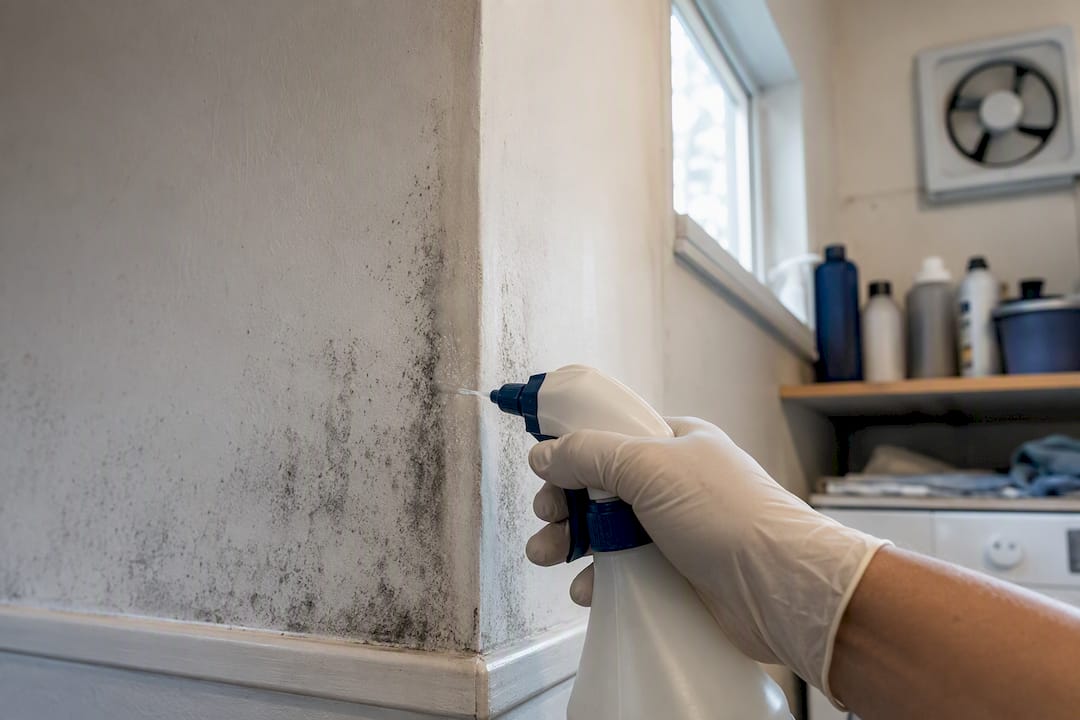
Clean it yourself when: the affected area is small (under roughly 10 square feet), the surface is non-porous like tile or sealed concrete, and there’s no lingering odor after drying.
Call a certified remediator when: mold is visible on porous materials like drywall or subfloor, the odor persists after drying, or the affected square footage is large enough that DIY cleaning risks spreading spores through the HVAC system.
A credible remediation certificate typically includes:
- The company’s certification and license information
- The specific areas treated and the method used
- Pre- and post-treatment moisture or air-quality readings
- A clearance statement confirming the space passed post-remediation testing
Statistic Callout: Documented remediation records reduce buyer uncertainty more effectively than cosmetic repairs alone, since buyers and their inspectors are looking for proof the underlying cause was resolved, not just that it looks fine on the surface.
A remediation certificate does more than protect your legal position. It often changes financing outcomes too, since some lenders will approve a loan on a previously mold-affected property specifically because a clearance test exists in the file.
How to Handle Buyer Requests and Get to Closing
Buyers of water-damaged homes almost always ask for one of three things: additional repairs, a price credit, or the right to walk if their inspection turns up something new. Knowing your response in advance keeps negotiations from stalling.
A short response framework:
- If they ask for repairs you’ve already priced into your listing, agree quickly. It signals good faith and keeps momentum.
- If they ask for a credit beyond what your comps support, counter with your documentation. Moisture readings and contractor invoices are your strongest leverage against an inflated request.
- If they want an extended inspection contingency, agree to a reasonable window, but set a firm date. Open-ended contingencies are how deals quietly die.
- If a request would erase your entire margin, it’s fair to walk. A buyer who negotiates that hard before closing usually keeps negotiating after.
Set your concession threshold before you’re in the conversation. Decide in advance what percentage of the sale price you’re willing to give up in credits, and stop there. Sellers who negotiate without a limit tend to give away more than the actual repair cost justifies.
Closing checklist for water-damaged sales:
- Title company requests: disclosure forms, permits, and the remediation certificate, if applicable
- Escrow holdback paperwork, if repairs are being completed after closing rather than before
- A clear accounting of any pre-paid or escrowed repair allowance, itemized so both sides agree on scope
Present these documents proactively rather than waiting for the closing agent to chase you down. It shortens the file review and keeps your closing date intact.
AAS Home Buyers’ Solution for Water-Damaged Properties
Sellers facing a water damaged house sale often need more than a repair estimate. They need a fast, clear decision path. AAS Home Buyers offers three routes: a direct cash purchase for sellers who want speed and certainty, a Retail Buyer Program for sellers who want closer to retail pricing without managing repairs and showings themselves, and vetted agent referrals for sellers who’d rather list traditionally with someone experienced in damaged-property sales.
AAS is worth a call when:
- Your timeline is urgent, whether from foreclosure risk, relocation, or an inherited property you can’t maintain
- Repair costs are high enough that financing them before selling doesn’t make financial sense
- The property involves tenant complications or title issues that complicate a standard MLS listing
AAS asks for the same core documentation this guide recommends: inspection reports, contractor invoices, permits, and remediation certificates if applicable. That paperwork feeds directly into a transparent, data-driven valuation rather than a guess.
Sellers who come to the table with organized documentation, not a vague description of the damage, consistently get faster and fairer offers, because the buyer isn’t pricing in uncertainty on top of the repair cost.
Pro Tip: Request your cash offer before you invest in any repairs. Comparing that number against your repair-and-list estimate is the fastest way to know which path actually protects more of your equity.
What Conventional Advice Gets Wrong About Selling Damaged Homes
Most advice on selling a water-damaged house focuses on repairs first, disclosure second, as if the two were sequential rather than connected. That ordering costs sellers money. The research is consistent on one point: documentation, not renovation, is what actually reduces buyer resistance. A house with a completed remediation certificate and clean moisture readings sells easier than a partially repaired house with thin paperwork, even when the second house looks better in photos.
The bigger blind spot is timeline math. Sellers fixate on maximizing sale price and underweight the cost of carrying a damaged property for three or four extra months while contractors work. A cash offer or managed sale that closes in two weeks is sometimes worth more, after holding costs, than a repaired sale that takes a full season to complete.
If you take one thing from this guide, get your documentation organized before you decide anything else. The repair-versus-as-is decision becomes obvious once you actually have the numbers in front of you instead of guessing at them.
Get a Cash Offer or a Guided Sale Path From AAS Home Buyers
AAS Home Buyers is the alternative to a slow repair-and-list cycle for anyone selling a water damaged house. Instead of financing repairs out of pocket and waiting months for a financed buyer, you get a direct cash purchase, a Retail Buyer Program that manages listing and marketing for you, or a vetted agent referral if you’d rather sell traditionally.

Every path starts with the same transparent valuation, built on the documentation this guide walks through: inspection reports, invoices, permits, and remediation records. There are no hidden fees, and no pressure to pick a path before you understand your numbers. If your priority is speed or certainty rather than squeezing out every last dollar through a repair cycle, request a cash offer and compare it against your own repair math, or review the 3-step selling process to see exactly what documents you’ll need and how quickly closing can happen.
Sources
These resources support the claims and steps covered above:
- Selling a house with water damage: how agents keep deals alive — RealtyTimes
- Federal Emergency Management Agency (FEMA)
- Selling a House With Water Damage: What You Need to Know — Total Dry Restoration
FAQ
Is It Worth Buying a House With Water Damage?
It depends on the scope and whether the cause has been fixed. Buyers who get a professional inspection, moisture readings, and a clear remediation history often find water-damaged homes are priced to account for the repair cost, making them a reasonable investment when the paperwork is solid.
How Long Are You Liable for Repairs After Selling a House?
Liability varies by state, but sellers can face legal exposure if they knowingly failed to disclose known damage, sometimes for several years after closing. Providing a full, factual disclosure with supporting documentation at the time of sale is the strongest protection against later claims.
Do Home Sellers Have to Disclose Water Damage?
Yes, sellers are required in nearly every state to disclose known water damage, including damage that has already been repaired. Omitting known damage from a disclosure form is one of the most common causes of post-closing lawsuits.
How Much Does Water Damage Decrease Home Value?
The discount depends on scope, whether mold is present, and whether the cause has been permanently resolved, with contained and fully repaired damage discounting far less than widespread or unresolved damage. Getting a data-driven valuation, like the ones AAS Home Buyers provides, gives you a specific number instead of a rough estimate.
Can I Sell a House As-Is Without Making Any Repairs?
Yes, selling as-is is common when repair costs exceed your budget or timeline, and cash buyers or investors are the typical market for these sales. You’ll still need to disclose the damage fully, even though you’re not repairing it before the sale.