
Best Time to Sell Your House: Late May Listings Can Add About $6,000
The national sweet spot for listing runs from late April through late May, when spring demand peaks and buyer competition drives prices higher. Homes listed in this window tend to sell faster and for more money than the annual average. That said, your local market, current mortgage rates, and how urgently you need to move can shift the ideal window by several weeks in either direction. If you need to sell now, focus on pricing and condition first. Timing is a bonus, not a substitute.
TL;DR:
- Listing in late April through mid-April can maximize sale price and speed, with premiums often reaching around 10% in early spring.
- Local market factors such as inventory levels, school calendars, and tech hiring cycles can shift the optimal listing week by several weeks or months.
- Mortgage rate trends and inventory fluctuations typically have a larger impact on sale timing and price than seasonal timing.
- Preparing the home with clear repairs, good photos, and strong curb appeal often yields higher returns than merely waiting for the peak season.
- Sellers needing flexibility can consider cash offers, managed sale programs, or agent referrals, especially during economic downturns or low-demand periods.
Table of Contents
- What Does National Research Say Is the Best Time to Sell a House?
- How Does Your Metro Area Change the Ideal Listing Week?
- Should I Sell Now or Wait? Weighing Rates and Inventory
- What Listing Tactics Actually Increase Buyer Competition?
- How Should You Price and Prepare Your Home to Sell?
- How Long Does It Actually Take to Sell a House?
- Which AAS Home Buyers Option Fits Your Selling Situation?
- Does the Economy Affect When You Should Sell?
- How Do Rising or Falling Interest Rates Affect Buyer Urgency?
- Is the Best Time to Sell Different for a Condo Than a House?
- Timing Matters, But Readiness Wins
- Ready to Sell? Here’s How AAS Home Buyers Can Help
- Sources
- FAQ
What Does National Research Say Is the Best Time to Sell a House?
Multiple independent data sources point to the same few weeks, though each measures it slightly differently. That convergence matters. When Zillow, Redfin, ATTOM, and Realtor.com all land on spring, it’s not a coincidence of marketing copy. It’s buyer behavior showing up in the numbers.
Here’s what each found:
- Zillow reports homes listed in the last two weeks of May sell for about 1.7% more nationwide, roughly $6,000 more on a typical U.S. home, with far bigger premiums in high-priced coastal metros.
- Redfin finds that late April often produces the fastest sales and the strongest odds of an above-asking offer, making it the better window when speed matters as much as price.
- ATTOM analyzed 52 million sales between 2015 and 2025 and found seller premiums concentrate in early spring: March led with a 10.7% seller premium, with April and May close behind at about 10.2% each.
- Realtor.com goes narrower, scoring individual weeks rather than months. Its research pegged the week of April 13 through 19 as the best single week to list, based on a composite score built from 2018 through 2024 data.
Pro Tip: Don’t treat “spring” as one big window. A week-level view, like Realtor.com’s, shows the sweet spot is often narrower than a full season, so plan your prep timeline around a specific target week, not just “sometime in April.”
How Does Your Metro Area Change the Ideal Listing Week?
National averages hide a lot of local variation. The exact week that maximizes your sale price depends heavily on where you live, and the gap between markets can be dramatic.
Zillow’s metro data shows some of the sharpest examples:
- San Jose often peaks earlier than the national window, sometimes in February, because tech-sector hiring cycles and mild winters pull buyers into the market sooner.
- Boston and Seattle show more variability year to year, often tied to school calendars and how quickly local inventory turns over.
- Baltimore and several Southeastern metros tend to peak later, sometimes into early summer, reflecting slower spring inventory buildup.
The dollar stakes of getting this right scale with home prices. In expensive coastal metros, hitting the optimal week can add tens of thousands of dollars to the final sale price, not just a few thousand.
To find your own window, run this three-step check before you set a listing date:
- Look up the most recent metro-level seller-premium report for your city.
- Ask your agent for local MLS days-on-market trends over the past 12 to 24 months.
- Compare current active inventory in your zip code against the same month last year.
Should I Sell Now or Wait? Weighing Rates and Inventory
Calendar timing is real, but it’s rarely the biggest lever you control. Mortgage rates and local inventory levels usually move the needle more than which week you list in.
A jump or drop in mortgage rates can expand or shrink your buyer pool within a matter of weeks. When rates fall even half a point, monthly payments become more affordable and more buyers qualify to make offers on your home. When rates climb, that pool tightens fast, and no amount of seasonal timing will fully offset it. Rate movement and inventory levels typically carry more weight on your final sale price than the calendar, which is why pricing strategy deserves at least as much attention as your listing date.
Here’s what to weigh before deciding whether to wait for a better window:
- Mortgage rate trend: falling rates widen your buyer pool; rising rates narrow it, sometimes overnight.
- Local inventory: fewer competing listings make any week a good week; a flood of new listings can erase a seasonal advantage.
- Home presentation: sharp photos, basic repairs, and decluttering often add more dollar value than shifting your listing by a week or two.
If you’re torn between listing now and waiting for a documented seasonal bump, only wait when your local data confirms a real premium and your personal schedule can absorb the delay.
What Listing Tactics Actually Increase Buyer Competition?
Picking the right week only pays off if the mechanics of your launch are dialed in. A few tactical choices can meaningfully increase the odds of multiple offers.
- List Tuesday through Thursday. Mid-week listings gain traction on the MLS before weekend showings begin, which builds momentum right when the most buyers are looking.
- Have everything live on day one. Professional photos, a complete listing description, and a scheduled showing window should all launch together, not trickle in over the first week.
- Give yourself real prep lead time. Redfin recommends hiring an agent roughly eight weeks before your target listing date to allow time for repairs, staging, and marketing setup.
- Compensate when timing isn’t ideal. If you’re listing in a slower month, aggressive, realistic pricing and a faster show-ready turnaround can recover ground the calendar cost you.
How Should You Price and Prepare Your Home to Sell?
Getting your price right does more for your bottom line than nailing the perfect week. Start with a comparative market analysis, layer in recent seller-premium data for your area, and build in a small buffer for negotiation. Price too high and you risk sitting on the market past the seasonal window that was supposed to help you.
A handful of prep items tend to return more than they cost:
- Curb appeal (fresh mulch, a clean walkway, a painted front door) is often the highest-ROI, lowest-cost fix available.
- Decluttering and depersonalizing costs little beyond time and consistently helps buyers picture themselves in the space.
- Basic repairs (leaky faucets, loose flooring, chipped paint) prevent inspection surprises that can derail a deal later.
- Professional photos pay for themselves almost every time, since most buyers form their first impression online.
For homes needing more than cosmetic work, a practical guide to selling a house as is can help you decide whether full repairs make sense. Small upgrades like closet and door makeovers or energy-efficiency improvements that can raise appraised value are worth a look if you have a few weeks to spare. If your timeline is tight, repairs are extensive, or you’re dealing with probate or foreclosure pressure, a cash sale or managed listing program deserves a serious look instead of a full renovation push.
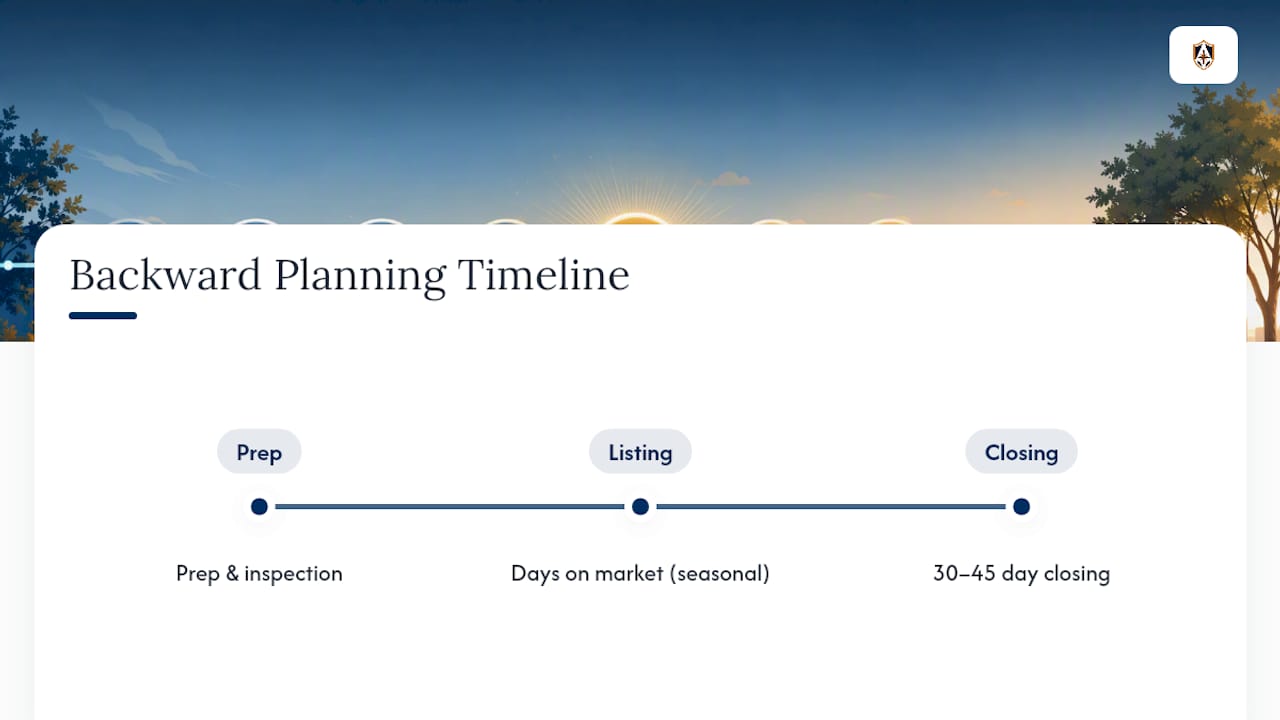
How Long Does It Actually Take to Sell a House?
Expect spring listings to move faster than winter ones, though exact timelines vary by local demand. Realtor, so build that prep time into your plan before you count days on market.
Once you’re under contract, the most common delays come from the inspection, the appraisal, and buyer financing. You can shrink each one: get a pre-listing inspection to surface issues early, price realistically so the appraisal isn’t a fight, and confirm your buyer’s lender has already issued a pre-approval, not just a pre-qualification.
If you need to hit a specific closing date, work backward: add roughly 30 to 45 days for the closing process itself, then layer in your expected days-on-market and prep time before setting your listing date.
Which AAS Home Buyers Option Fits Your Selling Situation?
Not every seller can wait for the ideal week, and not every home is ready for a traditional listing. AAS Home Buyers offers a few distinct paths depending on what you need most.
A direct cash purchase fits sellers facing foreclosure, major repairs, or a tight deadline who need certainty over top-dollar timing. The Retail Buyer Program suits sellers who want managed listing and marketing support without handling the process solo. A referral to a vetted local agent makes sense if you have time on your side and want to chase full seasonal market value.
Every option starts with a transparent valuation and no hidden fees, so you can compare what a traditional sale timeline might net you against a faster path. If your schedule allows it, timing your listing for spring demand is worth pursuing. If it doesn’t, a look at your full range of home selling options can clarify which path protects your equity best.
Does the Economy Affect When You Should Sell?
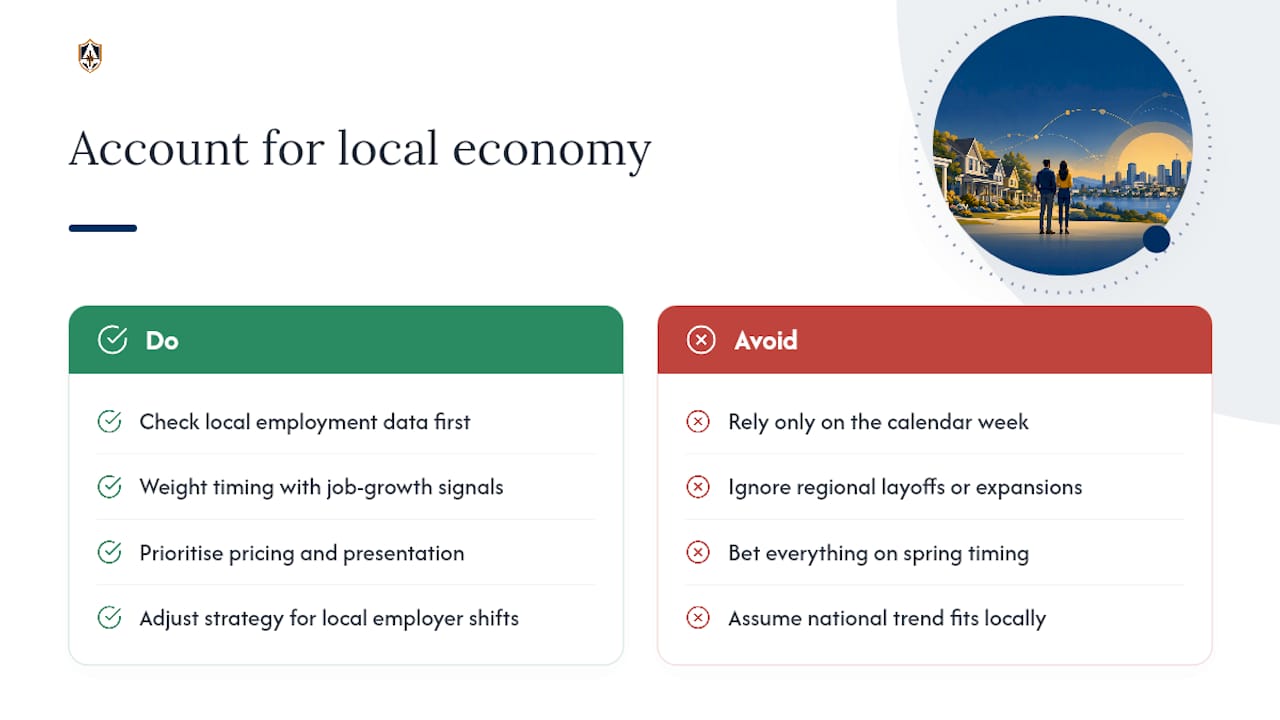
Broader economic cycles shape how much leverage seasonal timing actually gives you. During periods of strong job growth and low unemployment, buyer confidence rises, and that spring premium tends to hold or even widen, since more households feel secure enough to commit to a mortgage. During a slowdown or a spike in layoffs, even the best week on the calendar can underperform, because fewer qualified buyers are actively shopping.
Regional employment matters as much as the national picture. A metro with a major employer expanding, or a wave of relocations tied to a new corporate campus, can create local demand that overrides typical seasonal patterns entirely. The reverse is also true. A metro absorbing layoffs from a dominant industry may see spring listings underperform the national trend, regardless of how well-timed they are on paper.
This is why watching local employment data alongside seasonal timing gives you a fuller picture than the calendar alone. A strong spring in a market with rising unemployment is a different bet than a strong spring in a market adding jobs. If your local economy is wobbling, leaning harder on pricing and presentation, rather than betting everything on a specific week, protects you against a broader confidence dip pulling buyers out of the market unexpectedly.
How Do Rising or Falling Interest Rates Affect Buyer Urgency?
Mortgage rates get most of the attention, but broader interest rate trends, including Federal Reserve policy shifts, shape buyer urgency in ways that go beyond the monthly payment math. When rates are expected to rise further, buyers often accelerate their timeline to lock in current terms before borrowing gets more expensive. That urgency can work in your favor if you list while buyers are racing the clock.
The opposite dynamic shows up when rates are expected to fall. Buyers who can afford to wait sometimes pause, betting that a future rate cut will stretch their budget further or lower their payment. That hesitation can soften demand even during a historically strong seasonal window, which is part of why the same calendar week can perform differently from one year to the next.
Rate expectations also affect how many buyers are refinancing existing homes versus actively shopping for a new one, which shifts the size of your buyer pool independent of the season. Watching rate forecasts, not just the current rate, gives you a better read on whether buyers in your market are moving with urgency or sitting back to see what happens next.
Is the Best Time to Sell Different for a Condo Than a House?
Property type shifts the calendar more than most sellers expect. Single-family homes tend to align closely with the broad spring window, since families buying them often want to close before the new school year starts. That pressure compresses demand into March through June and makes the national data a solid guide.
Condos follow a looser pattern. Many condo buyers are first-time buyers, downsizers, or investors who aren’t tied to a school calendar, so demand spreads more evenly across the year. That means the seasonal premium for condos is often smaller than for single-family homes, and a well-priced condo can perform reasonably well outside the traditional spring window.
Investment properties and multi-family units follow buyer behavior even further from the residential calendar, often tracking rental-market cycles or fiscal-year investment timing instead of spring demand. If you’re selling a condo or investment property, weight your local inventory and buyer-type data more heavily than the single-family seasonal benchmarks discussed elsewhere in this guide.
Timing Matters, But Readiness Wins
Seasonal data gives you a real edge, but only when your home is priced right and ready to show. We’d rather see a seller list a well-prepared home in October than a cluttered one in the “perfect” week of April. Pair your seasonal strategy with a backup plan, because markets shift and personal timelines change. If you want a tailored read on your local window and your options, AAS Home Buyers is glad to talk it through.
— AAS
Ready to Sell? Here’s How AAS Home Buyers Can Help
If waiting for the ideal week isn’t realistic for your situation, you can choose from options like a direct cash purchase, a managed Retail Buyer Program, or a vetted agent referral, whichever fits your timeline and goals.

That flexibility matters most for sellers dealing with foreclosure pressure, inherited property, or repairs too extensive to tackle before listing. There are no hidden fees buried in the offer, and you keep control over which path suits your selling needs best. Start by reviewing AAS Home Buyers’ three-step selling process to see exactly what happens from your first conversation to closing day, then request your no-obligation valuation to see what your timeline could look like.
Sources
- Best time to list: Homes sell for $6,000 more in late May – Mar 18, 2026
- How to Sell a House in 2026 | Redfin
- ATTOM Best Days to Sell a Home: Spring Tops Seller Premiums
- The Best Time to Sell: The Week of April 13-19
FAQ
What Month Is the Hardest to Sell a House?
Winter months, particularly December and January, tend to be the slowest, with fewer buyers shopping and ATTOM’s seasonal data showing the lowest seller premiums outside the March through May window.
Should I Sell My House Now or Wait?
Wait only if your local data shows a documented seasonal premium you can realistically capture and your schedule allows the delay; otherwise, a well-priced, well-prepared home listed now usually outperforms an unprepared one listed in a “perfect” week.
How Long Should a House Sit on the Market?
Timelines vary by season and metro, but spring listings typically move faster than winter ones, and most sellers need about a month or less to prepare their home before listing, according to Realtor.com’s survey data.
What’s the Best Week to List My House in 2026?
Realtor.com’s research pointed to mid-April as the strongest single week nationally in recent years, though your specific metro’s inventory and demand trends can shift that window earlier or later, so check local data before committing to a date.
Does AAS Home Buyers Work Outside the Spring Selling Season?
Yes. AAS Home Buyers’ direct cash purchase and Retail Buyer Program options are built for sellers who can’t wait for seasonal demand, offering a transparent valuation and a closing timeline that doesn’t depend on the calendar.