
Title Company vs Real Estate Attorney: Who Do You Need?
A title company handles the transaction mechanics: title search, escrow, and title insurance. A real estate attorney provides legal advice and advocacy, drafting contracts, resolving disputes, and representing your interests. Some states require an attorney at closing regardless of how simple the deal looks.
You’ll want an attorney specifically when:
- The title search turns up a lien, judgment, or ownership dispute that needs legal resolution
- You’re buying through an LLC, handling an inherited property, or navigating a divorce settlement
TL;DR:
- Lenders may require attorney review for loans involving jumbo amounts, construction, or unusual financing, even in title states where attorneys are optional.
- Complex title issues, estate matters, or boundary disputes almost always necessitate hiring a lawyer upfront rather than relying solely on a title company.
- Title insurance covers defects present before closing, with owner’s policies providing ongoing protection for personal equity, and should be considered in every deal.
- Check your state’s classification—attorney state or title state—since it determines whether legal review is mandatory or optional for the closing process.
- Skipping legal counsel for complex transactions may save money initially but can lead to costly disputes or title problems later.
Table of Contents
- What Does a Title Company Do?
- What Does a Real Estate Attorney Do?
- Attorney States vs. Title States: Does Your State Require a Lawyer?
- When Should You Hire a Real Estate Attorney?
- What Do Title Companies and Attorneys Charge?
- How Does Title Insurance Actually Work?
- Your Pre-Closing Checklist: Questions to Ask
- Key Takeaways
- Sources
- FAQ
What Does a Title Company Do?
A title company acts as a neutral third party. It doesn’t represent you or the other side; it exists to verify who legally owns the property and make sure that ownership transfers cleanly. Best Title’s overview of title agency work describes this neutrality as central to the role, since the company issues insurance and holds funds without advocating for either party.
Here’s what that work actually involves:
- Title search: Combing county records for liens, judgments, unpaid taxes, or recording errors tied to the property.
- Title commitment: A written promise to insure the title once certain conditions (called “exceptions”) are cleared.
- Escrow: Holding the buyer’s deposit and the seller’s proceeds until every condition of the sale is met.
- Closing coordination: Scheduling signings, collecting documents, and disbursing funds.
- Recordation: Filing the deed and mortgage with the county so the new ownership becomes public record.
Search results often surface real problems: an old contractor’s lien nobody paid off, a name misspelled on a decades-old deed, or a boundary description that doesn’t match the current survey, as detailed in Long-Form Valuation — ValueMax Property Valuers. A title company can flag these issues and often insure around minor ones, but it can’t tell you what your legal rights are if a dispute erupts.
Pro Tip: Ask your title company for a copy of the title commitment before closing week, not the day of. Reading it early gives you time to ask questions if an exception looks unfamiliar.
What Does a Real Estate Attorney Do?

An attorney’s job is advocacy, not neutrality. Where a title company confirms facts about ownership, an attorney interprets what those facts mean for your legal position and fights for your interests when something goes wrong. BMK Legal’s breakdown of real estate lawyer duties lists tasks title companies simply aren’t licensed to perform.
A real estate attorney typically:
- Drafts or reviews the purchase contract and negotiates terms on your behalf
- Resolves title defects that require legal action, such as filing a quiet-title suit or clearing an old lien through the courts
- Prepares or reviews the deed and advises on ownership structures like an LLC or trust
- Represents you directly if a dispute lands in litigation or arbitration
That advocacy comes with formal accountability. Attorneys work under attorney-client privilege and a fiduciary duty to you specifically, which means their obligation runs to your interests alone, not to “the transaction” in general.
Attorney States vs. Title States: Does Your State Require a Lawyer?
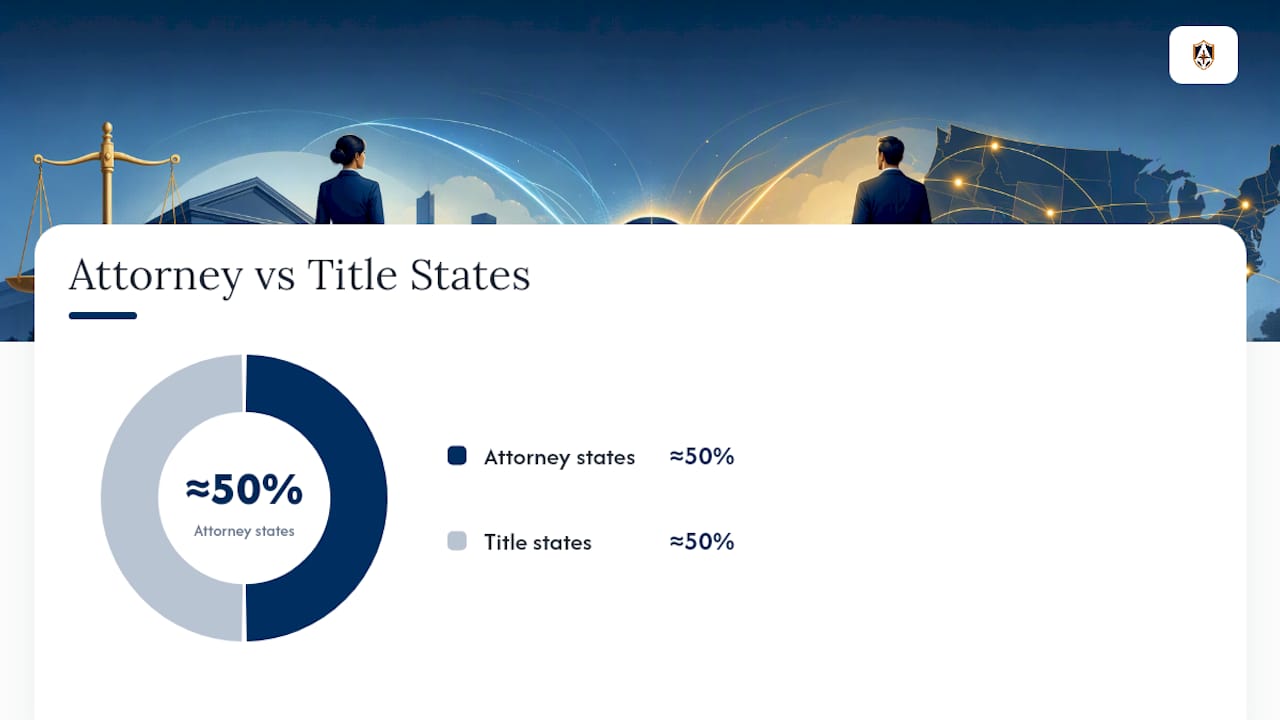
Roughly half the country legally requires an attorney to handle real estate closings. These are usually called “attorney states,” and they include much of the Northeast and parts of the Midwest and South. In “title states,” a title company or escrow agent can close the deal without a lawyer present at all.
The distinction matters because it changes your baseline, not your options:
- In an attorney state, legal review isn’t optional. It’s built into the closing process.
- In a title state, you can add an attorney voluntarily, but nothing requires it.
- DocJacket’s full 50-state list is the fastest way to confirm your state’s category before you assume either way.
One detail buyers often miss: even in a title state, your lender can still require attorney review as a condition of the loan. Guida Law Firm notes that this happens more often with jumbo loans, construction loans, or unusual financing structures, so confirm your lender’s requirements early rather than assuming the state rule is the whole story.
When Should You Hire a Real Estate Attorney?
Some deals are simple enough that a title company can carry the whole closing without friction. Others need a lawyer from the first phone call. Here’s how to tell which one you’re in:
- Complex title defects. If the search turns up an old lien, a probate claim, or a break in the chain of ownership, you’re looking at legal work a title company can’t perform. Deep knowledge from BMK Legal points out that title companies can list these exceptions and insure around some of them, but clearing the underlying problem usually takes a quiet-title suit or a formal lien release.
- Estate or divorce transfers. Selling a property tied up in probate or a divorce settlement means competing legal claims that a neutral title company has no authority to sort out.
- Boundary disputes. A fence on the wrong side of a property line, or a neighbor’s claim to part of your lot, needs a lawyer’s judgment, not an insurance policy.
- Seller financing or commercial/LLC transfers. Anytime ownership runs through an entity rather than a person, the paperwork and liability questions multiply.
If your situation fits any of those, contact an attorney before you sign a contract, not after. If your deal is a straightforward owner-occupied purchase with a clean preliminary title report, a title company alone often gets the job done.
Pro Tip: If you suspect contract negotiation will get contentious, bring in an attorney before you make an offer. Renegotiating terms after signing is far harder than building protection into the contract from the start.
What Do Title Companies and Attorneys Charge?
Title company fees usually break into three pieces: the search fee, the title insurance premium, and a settlement or escrow fee for coordinating the closing. Insurance premiums are typically set by state-regulated rate schedules, so they don’t vary as much by provider as attorney fees do.
Attorney fees follow different models entirely:
- Flat fee for a standard residential closing
- Hourly billing, common when negotiation or dispute resolution is involved
- Scope-based fees that climb sharply if litigation or a quiet-title action becomes necessary
Who pays for which policy varies by custom rather than law in most states. Sellers often cover the owner’s policy, buyers usually cover the lender’s policy, though Real Estate Transaction Authority notes this splits differently depending on regional practice and negotiating leverage.
How Does Title Insurance Actually Work?
Title insurance protects against defects that existed before closing but surfaced afterward. It’s a one-time premium paid at closing, not a recurring cost, which makes it different from nearly every other type of insurance you own.
Two policies typically exist side by side:
- Lender’s policy: Protects the mortgage holder’s financial interest. Required by nearly every lender, and it expires once the loan is paid off.
- Owner’s policy: Protects your equity for as long as you own the property. Optional in most states, but it’s the only policy that protects you personally.
Armour Title Company’s comparison of coverage lists forged signatures, undisclosed heirs, and liens missed during the public records search as common covered defects. Exclusions typically include problems you already knew about at closing and anything created after you took ownership.
A title defect doesn’t announce itself. It shows up years later as a certified letter from an heir nobody knew existed, claiming a share of a house you thought was fully yours.
That’s the real argument for the owner’s policy: it’s a single closing-cost line item that keeps working for as long as you hold the deed.
Your Pre-Closing Checklist: Questions to Ask
Before you sign anything, get direct answers from your title company, attorney, or lender. Ambiguity here is exactly where problems slip through.
- Who is running the title search, and who resolves any exceptions it turns up?
- If a dispute arises, who represents your interests specifically, not the transaction generally?
- What are the exact coverage limits on both the owner’s and lender’s policies?
- When precisely does closing happen, and what triggers the release of escrowed funds?
- Where will the deed be recorded, and who do you contact if a title issue surfaces after closing?
Pro Tip: Get these answers in writing, even a short email confirmation. If a title issue surfaces two years after closing, you’ll want a paper trail showing who told you what.
How AAS Home Buyers Supports Sellers Through This Process
AAS Home Buyers documents a transparent three-step selling process and connects sellers with vetted local agents through a realtor referral network. When a sale involves an estate, a dispute, or complex financing, AAS advises sellers to consult a real estate attorney before moving forward, since no home-selling service replaces legal counsel when real legal risk exists.
Weighing Cost Against Protection
Skipping legal counsel to save a few hundred dollars can cost far more if a title defect or contract dispute surfaces later. Check your state’s rule first, then talk to an attorney early if your deal has any real complexity.
— AAS
A Streamlined Path When You’d Rather Skip the Complexity
If reading through title exceptions and closing timelines sounds like more friction than you want, AAS Home Buyers offers a different route to the same finish line: a sold house.

AAS Home Buyers gives sellers three ways to close without managing title logistics alone: a direct cash purchase with a fast timeline, a Retail Buyer Program that handles listing and marketing for you, or a referral to a vetted local agent if you’d rather list traditionally. Each path is built around your specific situation rather than a single fixed process. That said, none of these options replace an attorney when your sale involves probate, a contested title, or an ownership dispute. AAS’s own terms and disclosures outline when outside legal counsel becomes necessary, and pairing that guidance with a clean seller process is exactly the point.
If you want to see how the process works before deciding anything, start with AAS’s three-step selling process and get a transparent read on your options.
Key Takeaways
A title company manages closing mechanics and insurance while a real estate attorney provides legal advocacy, and your state’s rules plus the deal’s complexity determine whether you need one, the other, or both.
| Point | Details |
|---|---|
| Know your state’s category | Check whether you’re in an attorney state or a title state before assuming either party is optional. |
| Watch for lender requirements | Some lenders require attorney review even in title states, especially on unusual financing. |
| Hire early for complex deals | Bring in an attorney before signing a contract if title defects, estate issues, or disputes are likely. |
| Buy the owner’s policy | It’s the only title insurance that protects your personal equity for as long as you own the home. |
| Consider AAS for a simpler path | AAS Home Buyers offers cash, managed listing, or agent referral options, and recommends attorney counsel for complex or disputed sales. |
Where to Verify State Rules and Find Counsel
Check your state’s classification and industry guidance directly rather than relying on a single source.
- DocJacket’s attorney states vs. title states list
- Real Estate Transaction Authority’s regulatory comparison
- Your state bar association’s lawyer referral service, for attorney vetting in your area
This article is general information, not a substitute for advice from a qualified lawyer. Consult a qualified legal professional about your own circumstances before acting on anything here.
Sources
- The role of a title agency in a real estate closing — Best Title
- What is a real estate lawyer and what do they do? — BMK Legal
- Attorney States vs. Title States: Full 50-State List — DocJacket
- Title company vs closing attorney — Real Estate Transaction Authority
FAQ
Should I Use a Title Company or an Attorney?
Use a title company for a straightforward purchase with a clean title search; add an attorney when the deal involves disputes, complex financing, or a title defect the title company can’t resolve.
Is a Title Company Cheaper Than an Attorney?
Usually, yes, since title company fees are largely set by regulated insurance rate schedules while attorney fees rise with negotiation time or litigation, but skipping legal counsel on a complicated deal can cost more later.
What Should a Title Company Not Do?
A title company cannot give legal advice, represent your interests in a dispute, or resolve legal claims like probate issues or contested ownership, since it isn’t licensed to practice law.
Does Florida Use Title Companies or Closing Attorneys?
Florida is a title state, meaning title companies can legally handle closings without an attorney present, though buyers and sellers can still hire one voluntarily for added protection.
Can AAS Home Buyers Help if My Sale Involves a Title Dispute?
AAS Home Buyers can guide sellers through its three-step process and referral network, but recommends consulting a real estate attorney first when a sale involves estate matters, disputes, or contested title.