
Selling a House With Solar Panels: What to Know First
Yes, you can sell a home with solar panels, and for most sellers it’s a straightforward transaction. The path just depends on how you own the system. Owned, loan-financed, leased, and power purchase agreement (PPA) systems each require different paperwork and create different conversations with buyers. Before you list, take three actions:
- Find the solar contract and financing documents to confirm ownership type.
- Request a written payoff or transfer quote from your solar provider.
- Order or review the preliminary title report for any UCC-1 filings.
Pro Tip: A written payoff quote can take one to three weeks to arrive from some providers. Request it before you sign a listing agreement, not after you’re already under contract.
Key Takeaways
Selling a solar-equipped home comes down to identifying ownership type early and clearing any UCC-1 filings before they can stall your closing.
| Point | Details |
|---|---|
| Identify ownership type first | Owned, loan-financed, leased, and PPA systems each require different paperwork and buyer conversations. |
| Get a written payoff or transfer quote | Request this from your solar provider two to four weeks before listing to avoid delays. |
| Check the title report for UCC-1 filings | Leased and PPA systems often carry a fixture filing that title companies must resolve before closing. |
| Document the system’s value | Owned systems sold for a 4.1% average premium; bring bills, warranty terms, and system size to back it up. |
| Consider a direct sale when equity is thin | AAS Home Buyers offers transparent valuations and multiple selling paths for sellers facing lease buyouts or tight timelines. |
This article is general information, not a substitute for advice from a qualified financial advisor. Consult a qualified financial professional about your own circumstances before acting on anything here.
Table of Contents
- How Ownership Type Changes Your Solar Home Sale
- Does Solar Actually Raise Your Home’s Sale Price?
- What Liens and Lease Terms Mean for Your Buyer’s Loan
- What to Gather Before You List a Solar Home
- How to Market and Price a Solar-Equipped Listing
- Seven Questions to Ask Before Choosing Your Selling Route
- AAS Home Buyers: A Direct Option When Solar Complicates Your Timeline
- Sources
- FAQ
How Ownership Type Changes Your Solar Home Sale
Fully owned systems are the simplest to sell. You paid cash or finished financing, so there’s no lien to clear and no third party to loop in. Buyers see a straightforward upgrade.
Solar loans work almost the same way, except a balance remains. Most sellers pay it off at closing using sale proceeds, similar to paying off a second mortgage.
Leased systems and PPAs are different animals. The solar company still owns the equipment, and it typically files a UCC-1 with the county or state to protect its interest in the panels as personal property attached to your roof. At sale, you’ll generally choose to transfer the lease to the buyer (subject to their credit approval), buy out the remaining contract, or occasionally have the provider remove the system. Realtor-sourced guidance recommends paying off loans when feasible and preparing transfer paperwork early so the lease doesn’t stall your closing.
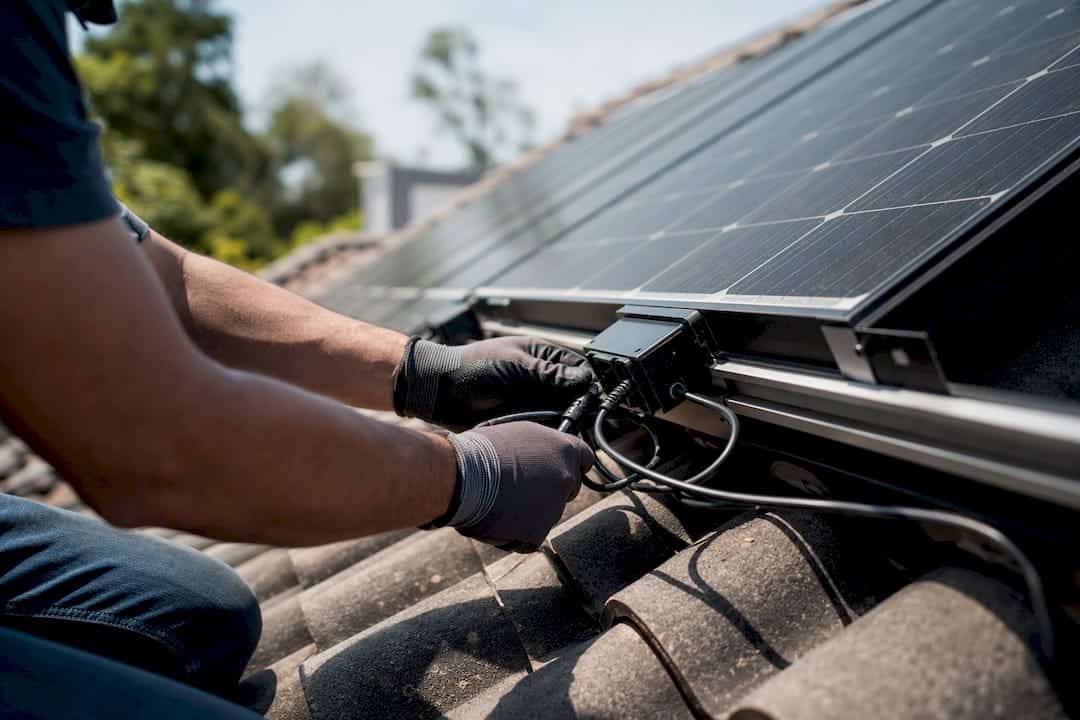
A quick checklist by ownership type: owned systems need a title-free confirmation and warranty transfer; loans need a ten-day payoff statement; leases and PPAs need a transfer application, buyout quote, and provider’s estimated processing timeline, which often runs two to four weeks.
Does Solar Actually Raise Your Home’s Sale Price?
The evidence says yes, with real numbers behind it. Homes with solar sold for 4.1% more on average than comparable homes without it, roughly $9,274 more on a median-priced home, according to Zillow’s research. A multi-state analysis from Berkeley Lab put the premium closer to $4 per watt, or about $15,000 for a typical 3.6 kW system, and recommended using replacement cost net of incentives as a pricing benchmark. Both figures shift by market, electricity rates, and how much of the panel cost has already been paid off.
The Department of Energy notes that buyers often view owned solar as a home upgrade, which tends to support both higher prices and quicker sales, while leased systems usually don’t move the needle the same way since the buyer inherits payments rather than an asset.
To back up your number at appraisal, gather:
- Twelve months of electric bills showing pre- and post-solar usage.
- System size in kilowatts (kW) and the original installed cost.
- Remaining warranty terms for panels and inverter.
- Any recent inspection or performance monitoring reports.
What Liens and Lease Terms Mean for Your Buyer’s Loan
A UCC-1 fixture filing is the biggest hidden obstacle in a solar home sale. When a leasing company or PPA provider finances your system, it files a UCC-1 with your state to establish a claim on the equipment, similar to how a car lender files a lien on a title. That filing shows up on your preliminary title report, and title companies won’t close until it’s resolved through subordination, payoff, or transfer. Sellers with leased systems have essentially three paths, and running the numbers on each with your agent before you accept an offer avoids surprises at the closing table.
Lease and PPA payments also affect the buyer’s side. Mortgage lenders typically count a solar lease or PPA payment against the buyer’s debt-to-income (DTI) ratio, the same way they’d count a car payment or student loan. That can shrink how much house the buyer qualifies for, even if their monthly electric bill savings offset the lease cost. Some buyers walk away from otherwise strong offers once their lender flags this.
To keep escrow moving:
- Request a written payoff or transfer quote from the provider before listing.
- Ask specifically about subordination or termination procedures for the UCC-1.
- Loop in your title or escrow officer early so they can flag the filing before it becomes a closing-week emergency.
Pro Tip: Ask your solar provider for their standard transfer timeline in writing. Some companies process transfers in a week; others take a month, and that gap can blow past your contract’s closing date.
What to Gather Before You List a Solar Home
Buyers and appraisers respond well to paperwork that shows a system was properly installed, permitted, and maintained. Assemble these two to four weeks before you list:
- The original solar contract, financing agreement, or lease/PPA terms.
- A current payoff quote or transfer application from your provider.
- Warranty documentation for panels, inverter, and workmanship.
- Monitoring account login credentials or transfer instructions for the buyer.
- Permit records and any inspection or roof condition reports tied to the installation.
- Twelve months of recent electric bills.
On the maintenance side, clean the panels (dirt and debris can measurably cut output), confirm the inverter’s status LED shows normal operation, and secure any visible wiring or conduit that looks loose. If you have battery storage, note its age and warranty status separately. Well-documented, well-maintained systems are the ones research consistently ties to real sale premiums, since buyers and appraisers both respond to a paper trail, not just panels on a roof.
How to Market and Price a Solar-Equipped Listing
Lead your marketing with the facts buyers actually care about: system ownership status, size in kW, average monthly savings, and remaining warranty years. A partner solar-cleaning service before photos are taken makes a real difference in how the system reads in listing photos.
If the system is leased, disclose it plainly in the listing and give your agent a packet with transfer and buyout numbers ready to share. Hiding lease terms until under contract is the fastest way to lose a buyer’s trust mid-escrow. Realtor guidance is consistent here: emphasize net savings after any lease payment, because buyers who only see the lease line item assume it’s pure cost.
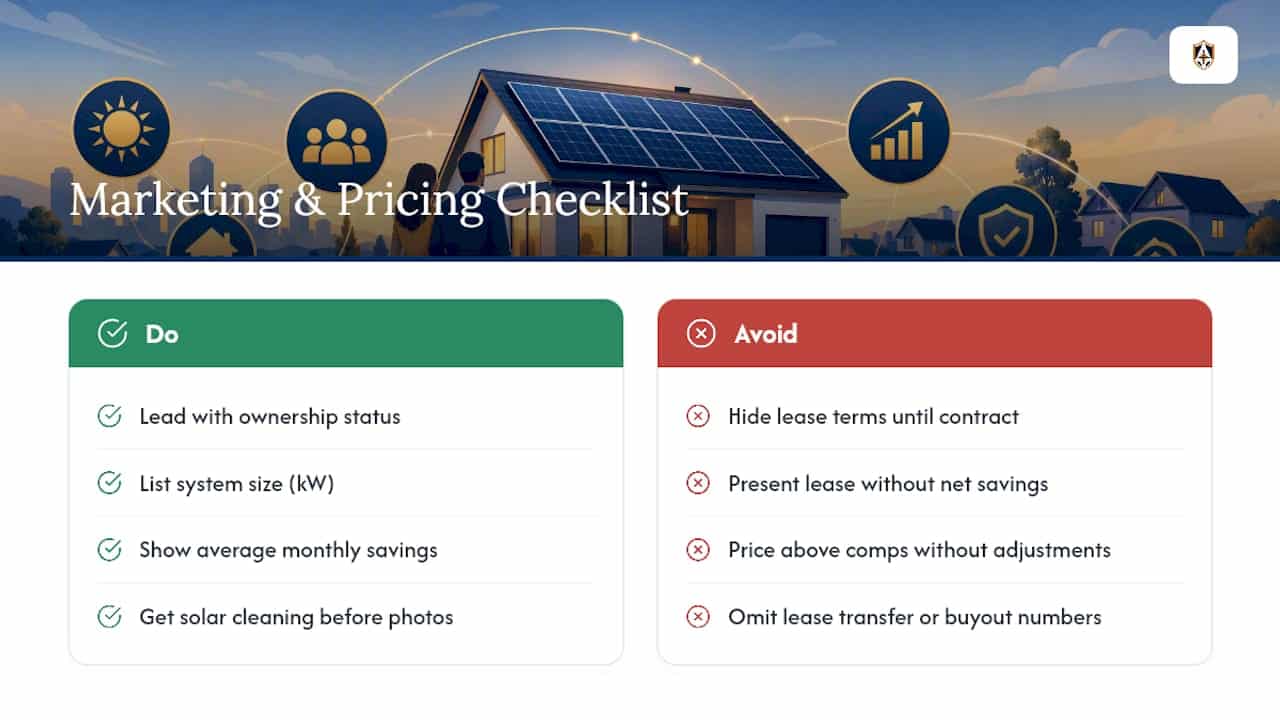
For pricing, blend Berkeley Lab’s replacement-cost-net-of-incentives approach with local comps. If the system is leased, price the home closer to comps without solar, then let the transferable savings serve as a selling point rather than a built-in premium.
Seven Questions to Ask Before Choosing Your Selling Route
- Have you sold homes with solar before, and can you show comps?
- What’s your marketing plan for highlighting the solar system?
- Is there a UCC-1 filing on the title, and who resolves it?
- What does title need from me to clear it before closing?
- What’s the realistic timetable for subordination or termination?
- Would a lease buyout cost more than the system adds to my sale price?
- If my timeline is tight or equity is thin, is a direct sale a better fit than listing?
That last question matters most if you’re facing a costly buyout with limited home equity to absorb it.
Why a Flexible Sale Path Often Protects Solar Home Sellers
Sellers with thin equity or a looming deadline often do better prioritizing certainty over a maximum list price. AAS Home Buyers evaluates solar-related title issues upfront and presents transparent pricing options instead of surprises at closing.
AAS Home Buyers: A Direct Option When Solar Complicates Your Timeline
If your solar lease has a buyout cost that eats into your equity, or your timeline doesn’t allow for a lengthy UCC-1 subordination process, a traditional listing isn’t always the practical choice. AAS Home Buyers gives sellers with solar financing complications a way to move forward without waiting on a buyer’s lender to sort out DTI concerns tied to lease payments.

We work through the ownership picture directly with you, whether that’s a payoff on a solar loan or a lease transfer, and lay out your options plainly: a direct cash purchase, our Retail Buyer Program with managed listing support, or a referral to a vetted agent if a traditional sale still fits your goals. Every valuation is data-driven and transparent, with no hidden fees eating into your equity. Start by reviewing our transparent selling process or visit AAS Home Buyers to see which option fits your situation and get a straightforward next step.
Sources
- Selling Into the Sun: Price Premium Analysis of a Multi-State Dataset of Solar Homes | Energy Markets & Planning
- Solar Homes Sell for a Premium | Department of Energy
- 6 Best Realtor Tips for Selling Your Home with Solar Panels — SolarReviews
FAQ
Is It Difficult to Sell a House With Solar Panels?
Not for owned systems, which sell like any other home improvement. Leased systems and PPAs add extra steps like transfer approval or a buyout quote, but they’re manageable when you start the paperwork early.
What Is the 33% Rule for Solar Panels?
This isn’t a standardized industry rule with a single agreed-upon definition, and it doesn’t apply directly to home sales. Focus instead on documented payoff amounts and transfer terms rather than informal rules of thumb.
What Happens to My Solar Panels When I Sell My House?
Owned panels transfer with the home like any fixture. Leased or PPA panels require either a transfer to the buyer with provider approval, a buyout of the remaining contract, or occasionally removal.
Do Houses With Solar Sell for More Money?
Homes with owned solar systems sold for 4.1% more on average, and Berkeley Lab found premiums near $4 per watt. Leased systems typically don’t add the same premium since the buyer takes on ongoing payments rather than owning an asset.
— AAS