
How to Sell a Fire Damaged House: 3 Proven Paths
You have three realistic ways to sell a fire damaged house: repair and list on the open market, sell as-is to a cash buyer or investor, or demolish and sell the land only. For most homeowners, the right path comes down to one calculation: if repair costs exceed a significant portion of your home’s after-repair value (ARV) and you need to close within weeks rather than months, selling as-is to a vetted cash buyer is usually the fastest and lowest-risk route.
Your immediate next steps, regardless of which path you choose:
- Get a professional fire damage assessment from a licensed contractor or restoration specialist
- Order a licensed appraisal showing both current as-is value and estimated ARV after repairs
- Contact your insurance adjuster to confirm your payout terms and whether proceeds can be retained if you sell as-is
- Request at least two cash offers so you have a baseline for comparison
Key Takeaways
Selling a fire damaged house comes down to one calculation: compare realistic net proceeds under each path, then choose based on your equity position, repair cost relative to ARV, and how quickly you need to close.
| Point | Details |
|---|---|
| Three viable paths | Repair and list, sell as-is to a cash buyer, or demolish and sell land only. |
| Net-proceeds math drives the decision | If repair cost exceeds roughly 30% of ARV, the as-is cash sale often nets more after commissions and carrying costs. |
| Document everything from day one | A professional damage assessment and licensed appraisal are the two inputs that determine which path makes financial sense. |
| Disclose fully to avoid legal risk | Most U.S. states require disclosure of all known fire damage; concealment exposes sellers to rescission claims and statutory penalties. |
| AAS Home Buyers covers all three paths | Direct cash purchases, a managed Retail Buyer Program, and vetted agent referrals give you a matched option regardless of your situation. |
Table of Contents
- Can you sell a fire damaged house by repairing it first?
- How does selling as-is to a cash buyer work for fire damage?
- When does selling the land only make sense after a fire?
- How do you compare net proceeds across all three options?
- Step-by-step checklist to sell your house after a fire
- What are your disclosure obligations when selling a fire damaged home?
- Which documents actually increase your sale price and speed closing?
- How long does each option take, and what does it cost?
- How do you calculate land value for a fire damaged property?
- What we’ve seen work for homeowners in common situations
- How AAS Home Buyers can help you move forward
- Sources
- FAQ
Can you sell a fire damaged house by repairing it first?
Repairing before listing makes financial sense in certain circumstances when repair costs are relatively low compared to the home’s after-repair value (ARV), and you have the time and resources to complete the work. When those three conditions align, repair-and-list typically yields the highest gross sale price.
The evaluation starts with two numbers: a licensed contractor’s itemized estimate and a licensed appraiser’s ARV figure. The gap between repair cost and the price premium you’ll earn from a fully restored home is your repair ROI. If a $40,000 restoration adds $80,000 to the sale price, the math is straightforward. If a $120,000 rebuild adds $90,000, you’re better off on a different path.
What a thorough repair scope covers:
- Structural inspection and engineer’s report (if load-bearing elements were affected)
- Smoke and soot remediation, including HVAC cleaning
- Drywall, insulation, and framing replacement in affected rooms
- Electrical and plumbing systems check and repair
- Flooring, paint, and finish work
- Permits for all structural and systems work
Realistic timeline phases:
- Permits and contractor scheduling: 2–6 weeks
- Structural and systems work: multiple weeks depending on scope
- Finish work and inspections: 2–4 weeks
- Listing, marketing, and closing: several weeks
Total: typically several months from fire to closing.
Seller effort is real here. You’ll manage contractor schedules, pull permits, arrange interim housing, and carry mortgage, insurance, and utility costs throughout. Those carrying costs add up fast, often running several thousand dollars per month depending on your market and loan balance.

Pro Tip: Prioritize repairs that directly affect habitability and lender financing: electrical systems, structural integrity, smoke remediation, and roof. Cosmetic upgrades like premium finishes rarely recover their cost in a post-fire sale. Get written, itemized bids from at least three contractors before committing.
How does selling as-is to a cash buyer work for fire damage?
Selling as-is to a cash buyer or real estate investor is the right move when repair costs are high relative to likely price gains, when you need to close quickly, or when you have limited equity and can’t fund a renovation out of pocket. It’s also the path that eliminates contractor management, permit headaches, and months of carrying costs.
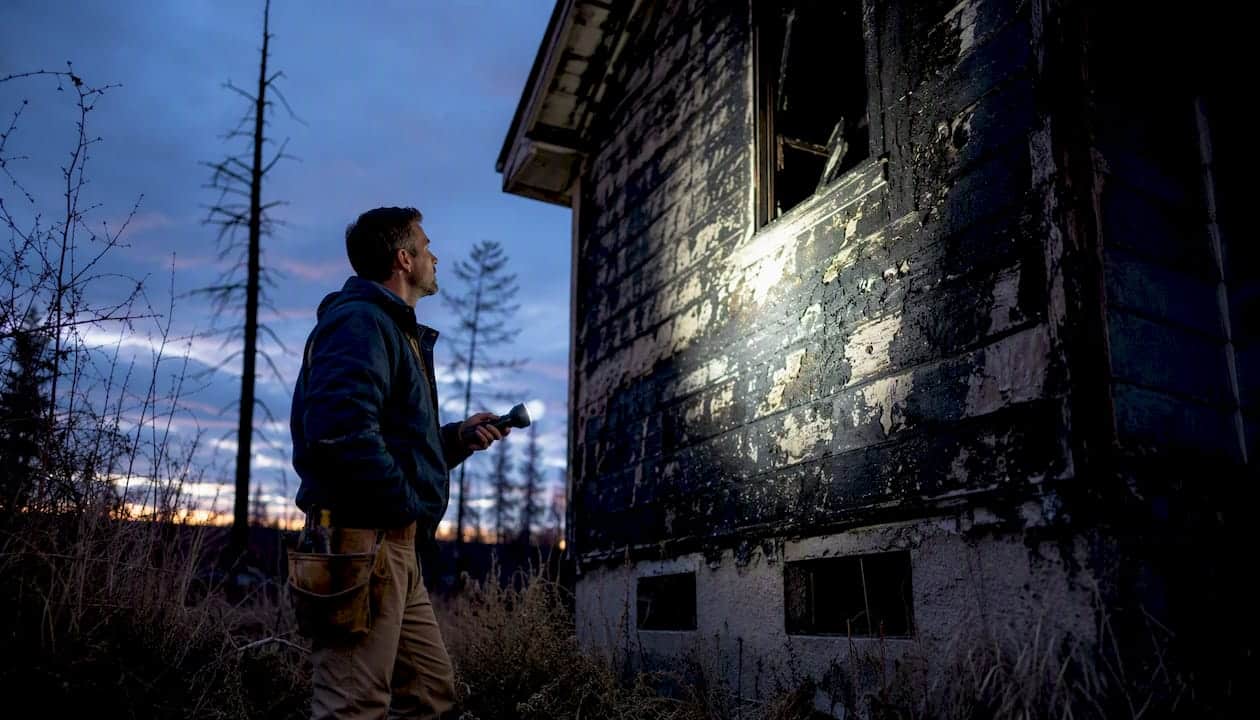
Cash buyers who specialize in fire-damaged properties price offers by estimating the home’s value after repairs and subtracting expected repair, holding, and profit costs. Offers typically reflect a significant discount to after-repair value (ARV), depending on damage severity, with moderately damaged homes receiving offers at a rate noticeably below ARV and even lower for severe damage. That discount reflects the buyer’s full assumption of repair risk and timeline. The trade-off is speed and certainty: most experienced investors can close in 1–6 weeks, and many cover closing costs.
Checklist for vetting any cash buyer:
- Proof of funds: Request a bank statement or letter from a financial institution confirming available capital. If an offer involves financing, verify the lender through NMLS Consumer Access.
- Transparent fee structure: No legitimate buyer charges upfront fees. Confirm in writing who pays closing costs.
- Clear contingency language: Understand what inspections they’ll conduct and whether the offer can be reduced after inspection.
- Title and lien handling: Confirm the buyer will work with a licensed title company to clear any post-disaster liens or contractor claims before closing.
- References or reviews: Ask for recent transactions on similar properties. Check public records for their past purchases.
- Closing timeline in writing: Get the expected close date in the purchase contract, not just verbally.
How to negotiate to protect your net proceeds:
- Request a fully itemized offer showing how the buyer calculated their price (ARV, estimated repairs, margin).
- Cap seller-paid closing costs at a specific dollar amount in the contract.
- Limit post-inspection price reductions to items not already disclosed in your damage assessment.
- Compare at least two or three offers before signing anything.
- Confirm the buyer uses a licensed title company and that you receive a copy of the title commitment before closing.
One practical note: if an offer involves any buyer financing or bridge lending, use NMLS Consumer Access to confirm the originator’s license is current and in good standing in your state.
When does selling the land only make sense after a fire?
The land-only path applies when structural damage is so extensive that rebuilding costs exceed what the repaired home would sell for, or when the lot itself is valuable enough that buyers will pay a meaningful price for a tear-down. In high-demand markets, a cleared lot in a desirable neighborhood can attract developers and builders who aren’t interested in the structure at all.
Basic demolition steps and costs to budget:
- Obtain a demolition permit from your local municipality (cost varies by jurisdiction, typically $200–$1,000)
- Hire a licensed demolition contractor for structure removal
- Arrange for debris hauling and disposal, including any hazardous materials (asbestos, lead paint) that require certified abatement
- Complete a soil or environmental check if the fire involved chemicals or fuel storage
- Grade and clear the lot to make it marketable
Demolition for a single-family home typically incurs several thousand to tens of thousands of dollars in costs, depending on size, materials, and local disposal fees, with hazardous material abatement adding more.
Simple land-value calculation:
Pros and cons versus selling as-is:
- Fewer inspection hurdles: A cleared lot has no structural concerns for buyers to negotiate over.
- Different buyer pool: You’re marketing to builders, developers, and land investors rather than homeowners or house flippers.
- Longer timeline: Demolition, permits, and lot prep add 2–4 months before you can list.
- Pricing expectations differ: Land buyers use comparable lot sales, not ARV, to set their offers.
Pro Tip: Get a demolition quote and a lot-value comparables analysis from a local agent or appraiser before deciding to demolish. In some markets, selling the fire-damaged structure as-is to an investor yields more net proceeds than a cleared lot sale, because the investor values the existing foundation and framing.
How do you compare net proceeds across all three options?
The only way to make a confident decision is to run the numbers for all three paths side by side. The calculation for each option uses the same core elements: expected sale price, costs to get there, and what you actually pocket at closing.
Elements to include in every scenario:
- Expected sale price (ARV for repaired home, as-is offer, or lot value)
- Repair or demolition costs
- Agent commissions typically amount to a percentage of the sale price for a listed property.
- Closing costs (typically 1%–3% of sale price)
- Carrying costs during the process (mortgage, utilities, insurance, temporary housing)
- Insurance proceeds received
Worked example (hypothetical home, ARV $300,000):
| Agent commission (5.5%) | — | — | — |
| Closing costs (2%) | — | — (buyer pays) | — |
| Carrying costs (6 months) | — | — | — |
| Insurance proceeds applied | +$60,000 | +$60,000 | +$60,000 |
| Estimated net proceeds | — | — | — |
In this example, repair-and-list yields only about $5,000 more than a cash sale, but requires six months of work, contractor management, and $85,000 in upfront repair spending. For many homeowners, the cash sale is the practical winner even though the gross price is lower.
Decision thresholds to guide your choice:
- If repair cost exceeds 30% of ARV, the as-is cash sale often nets more after commissions and carrying costs.
- If repair cost exceeds ARV itself, the land-only path or as-is sale is the only viable option.
- If you have no insurance proceeds and no cash reserves, repair-and-list is likely off the table regardless of the math.
- If your timeline is under 60 days, only the cash-buyer path can reliably close in time.
Step-by-step checklist to sell your house after a fire
Follow this checklist regardless of which sale path you choose. Skipping steps creates disclosure gaps, title problems, or insurance complications that can delay or kill a closing.
Ordered steps from fire event to closing:
- Secure the property and get official clearance. Follow Ready: do not re-enter until local fire authorities confirm the structure is safe. Board up openings to prevent unauthorized entry and weather damage.
- Document everything immediately. Photograph and video every room, every damaged system, and the exterior. Date-stamp all images. This documentation supports your insurance claim and your sale disclosures.
- File your insurance claim. Contact your insurer within the timeframe your policy requires. Request a written adjuster’s report and ask specifically about additional living expense (ALE) coverage if you need temporary housing.
- Order a professional damage assessment. Hire a licensed contractor or certified restoration specialist to produce an itemized scope of damage. This report drives every subsequent decision.
- Get a licensed appraisal. Ask for both an as-is value and an ARV estimate. This is the single most valuable input for deciding which sale path makes financial sense, as consistently recommended by leading real estate guidance.
- Resolve outstanding liens. Check with a title company for any contractor liens, unpaid assessments, or mortgage issues. Post-disaster title complications are common and must be cleared before any closing.
- Choose your sale path based on the net-proceeds comparison above.
- Complete required state disclosures. Fill out your state’s seller disclosure form accurately, including fire date, cause, extent of damage, and all repairs completed.
- Collect your document package (see below).
- List, accept an offer, and close with a licensed title company or real estate attorney.
Document checklist:
- Fire department incident report
- Insurance adjuster’s written report and claim settlement documents
- Professional damage assessment / restoration scope
- Contractor bids and any completed repair receipts with permits
- Licensed appraisal (as-is and ARV)
- Title report and mortgage payoff statement
- Any environmental or air-quality remediation certificates
Pro Tip: A licensed public adjuster (separate from your insurer’s adjuster) can often negotiate a higher insurance settlement on your behalf. Their fee is typically a percentage of the settlement increase, and on large claims, the net gain can be substantial.
What are your disclosure obligations when selling a fire damaged home?
Most U.S. states require sellers to disclose all known material defects, and fire damage qualifies as a material defect in every jurisdiction. The specific form and scope of disclosure vary by state, but the underlying obligation is consistent: you must tell buyers what you know.
Common items to disclose:
- Date and cause of the fire
- Extent of structural, electrical, plumbing, and cosmetic damage
- All repairs completed, including permits pulled and final inspections passed
- Any repairs that were not permitted or not completed
- Active liens, contractor holds, or unpaid assessments on the property
- Insurance claims filed and settlement amounts received
- Any known environmental hazards identified during remediation (asbestos, mold, chemical contamination)
Concealing known fire damage is one of the most legally exposed decisions a seller can make. Buyers who discover undisclosed damage after closing have grounds to sue for rescission (unwinding the sale) or damages. Courts have consistently held sellers liable when concealment is intentional, and some states impose statutory penalties on top of actual damages. Disclose fully, in writing, on the state-required form. If you’re uncertain about your state’s specific requirements, work with a licensed real estate attorney or a local agent who handles distressed property sales.
Always use your state’s official seller disclosure form. Most state real estate commissions publish these forms on their websites. A local real estate attorney can confirm whether additional disclosures are required for fire damage specifically in your state.
Which documents actually increase your sale price and speed closing?
Buyers and their lenders price risk. Every document you provide that reduces uncertainty tends to either raise an offer or remove a contingency that could slow the closing. This is true whether you’re selling repaired, as-is, or as a lot.
High-impact documents for any sale path:
- Professional fire and restoration assessment: An itemized scope from a certified specialist tells buyers exactly what was damaged and what was addressed. This is more persuasive than a general contractor’s opinion.
- Smoke and air-quality remediation certificate: When a qualified restoration firm completes remediation and issues a clearance certificate, it removes one of the most common buyer objections. Firms like RX2 Restoration & Remodel provide this documentation as part of their remediation process.
- Itemized contractor bids: For as-is sales, showing investors exactly what repairs will cost removes guesswork from their offer calculation and can result in a higher bid.
- Licensed appraisal: Both as-is and ARV figures give buyers and their lenders a credible baseline.
- Proof of cleared permits: Completed permits signal that repairs were done to code and inspected.
- Insurance correspondence: Showing the claim amount and settlement terms helps buyers understand the property’s history and confirms no open claims remain.
For a repair-and-list sale, the appraisal and completed permits carry the most weight. For an as-is cash sale, the damage assessment and contractor bids are most valuable. For a land-only sale, the environmental clearance and demolition permit are what buyers need to move forward confidently.
How long does each option take, and what does it cost?
Quick answer on timelines:
- Repair and list: 3–9 months total, depending on damage scope, contractor availability, and market conditions
- Sell as-is to a cash buyer: 1–6 weeks from accepted offer to closing in most cases
- Land-only sale: 2–4 months, including demolition, permits, lot prep, and marketing
Cost ranges by path:
- Restoration costs: Angi’s national cost guidance shows fire-damage restoration expenses vary widely based on the extent of structural damage, systems affected, and smoke remediation scope. Minor cosmetic fire damage may run $10,000–$30,000; moderate damage affecting multiple rooms and systems commonly runs $50,000–$150,000; severe or total-loss scenarios can exceed $200,000.
- Demolition costs: Typically $8,000–$25,000 for a single-family home, higher if hazardous materials are present.
- Carrying costs: Budget $2,000–$5,000 per month for mortgage, utilities, insurance, and temporary housing. Platforms like Rent can help you estimate realistic temporary housing costs in your area while repairs are underway.
- Agent commissions: 5%–6% of sale price for a listed property.
- Closing costs: 1%–3% of sale price for the seller; cash buyers often cover these entirely.
The as-is cash sale path has the lowest out-of-pocket cost because you spend nothing on repairs and often pay no commissions or closing costs. The repair-and-list path has the highest upfront exposure, though insurance proceeds can offset a significant portion.
How do you calculate land value for a fire damaged property?
The simplest approach: find comparable vacant lot sales in your area, adjust for your lot’s size and location, then subtract demolition, cleanup, and holding costs.
Formula:
Worked example:
Where to find comparable land sales:
- Your county assessor’s website (search recent vacant land sales by parcel type)
- A local real estate agent with access to MLS land and lot sales
- Recent tear-down sales in your neighborhood (these are the most accurate comparables)
- A licensed land appraiser for a formal opinion of value
When lot value clearly exceeds what any investor would pay for the damaged structure, demolition and a land sale makes sense. Get both numbers before committing.
What we’ve seen work for homeowners in common situations
The three-option framework is clean on paper, but real situations are messier. Here’s how we think about the most common scenarios.
No equity, no cash reserves, urgent timeline. This is the clearest case for an as-is cash sale. There’s no financial runway for repairs, and a long listing period only adds carrying costs to an already strained situation. A vetted cash buyer who can close in two to three weeks is the most practical path. The discount to ARV is real, but so is the certainty.
Solid equity, good insurance coverage, flexible timeline. Repair-and-list deserves serious consideration here. Run the net-proceeds comparison carefully. If the insurance settlement covers most of the restoration cost and the ARV premium is meaningful, the extra months of effort can pay off. The key is getting accurate contractor bids before committing, not after.
High land value, severe structural damage. When the structure is a total loss and the lot is in a desirable location, the land-only path can outperform both other options. Developers and builders in supply-constrained markets will pay a premium for a cleared, buildable lot. Get a lot-value appraisal and a demolition quote before making the call.
Moderate damage, uncertain insurance outcome. Start with the damage assessment and the insurance adjuster’s report before deciding anything. Your policy’s terms determine whether proceeds can be retained if you sell as-is or must be applied to repairs. That single policy detail can change the net-proceeds math significantly.
We’ve worked with homeowners across all four of these situations. The consistent finding: sellers who analyze financial options carefully and choose a path suited to their actual financial situation tend to achieve better outcomes.
How AAS Home Buyers can help you move forward
Selling a fire damaged property doesn’t have to mean choosing between a lowball offer and a months-long renovation. AAS Home Buyers gives you access to all three paths described in this article, matched to your actual situation.

For homeowners who need a fast, certain close, AAS offers direct cash purchases with transparent, data-driven valuations and no hidden fees. For sellers with equity and time to maximize proceeds, the AAS Retail Buyer Program manages the listing, marketing, and buyer coordination so you don’t have to. And for those who want to list after completing repairs, AAS connects you with vetted local agents through its agent referral network.
The process is straightforward. Share your property details, receive a clear evaluation of your options with realistic net-proceeds estimates for each, and choose the path that fits your timeline and financial goals. No pressure, no guesswork. You can review how the process works before you commit to anything.
Request your no-obligation evaluation at AAS Home Buyers and get a clear picture of what your property is worth under each scenario.
Sources
These are the primary references used throughout this article, each useful for a specific part of the decision process.
- Ready
- Angi: How much does fire damage restoration cost?
- RocketMoney: Homeowners insurance guide
- Title Forward
- NMLS Consumer Access
This article is general information, not a substitute for advice from a qualified financial advisor. Consult a qualified financial professional about your own circumstances before acting on anything here.
FAQ
Does a house lose value after a fire?
Yes, fire damage reduces home value, with the impact ranging from modest (cosmetic damage only) to severe (structural compromise or total loss). The actual value reduction depends on the extent of damage, cost to repair, and local market conditions.
What devalues a house the most?
Structural damage, compromised electrical or plumbing systems, and incomplete or unpermitted repairs are among the most significant value detractors. Undisclosed damage that surfaces during inspection can also collapse a deal entirely.
Can you sell a fire damaged house as-is without making repairs?
Yes. Cash buyers and real estate investors regularly purchase fire-damaged properties in as-is condition.
How long are you liable for repairs after selling a house?
Liability after closing depends on your state’s laws and what you disclosed. In most states, sellers who fully and accurately disclose known defects on the required forms have limited post-sale exposure. Sellers who conceal known damage can face rescission claims or lawsuits for years after closing, with no fixed statute of limitations in cases of intentional concealment.